shelf ────────────────────────────────────── 61
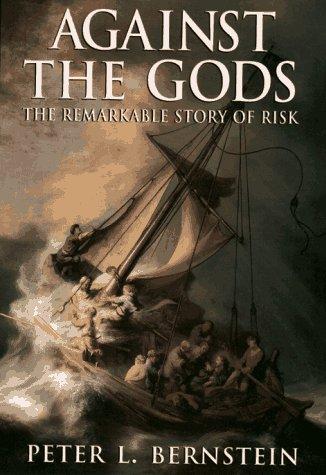 Against the Gods ················· Bernstein
 The Alchemy of Finance ··············· Soros
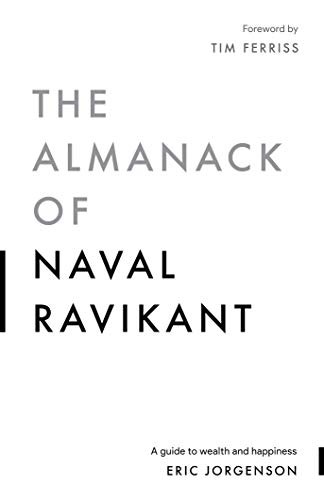 The Almanack of Naval Ravikant ··· Jorgenson
 Ametora ······························· Marx
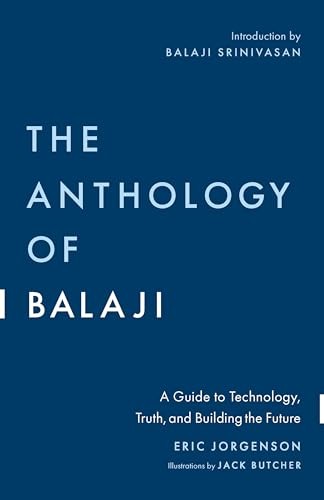 The Anthology of Balaji ·········· Jorgenson
 Any Happy Returns ·············· Oppenheimer
 Baruch: My Own Story ················ Baruch
 The Beginning of Infinity ·········· Deutsch
 Blockchain Revolution ············· Tapscott
 Boom ································ Hobart
 Capitalism and Freedom ············ Friedman
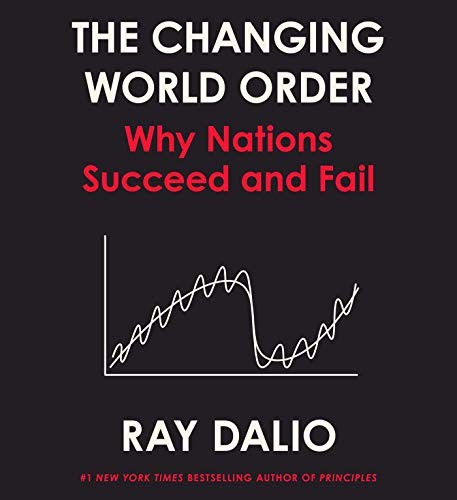 The Changing World Order ············· Dalio
 The Creative Act ····················· Rubin
 The Cryptopians ······················· Shin
 DeFi and the Future of Finance ······ Harvey
 Digital Minimalism ················· Newport
 Flash Boys ··························· Lewis
 Fooled by Randomness ················· Taleb
 Fortune's Formula ··············· Poundstone
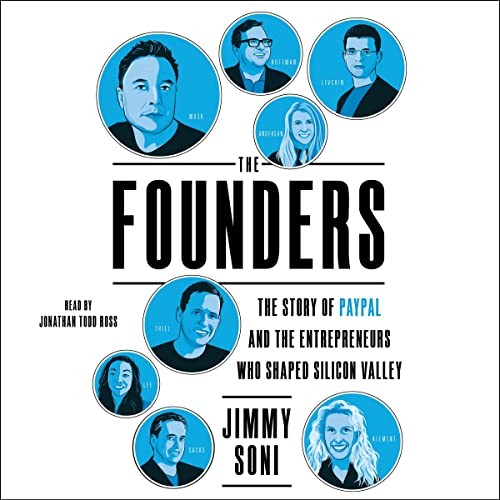 The Founders ·························· Soni
 The Four ·························· Galloway
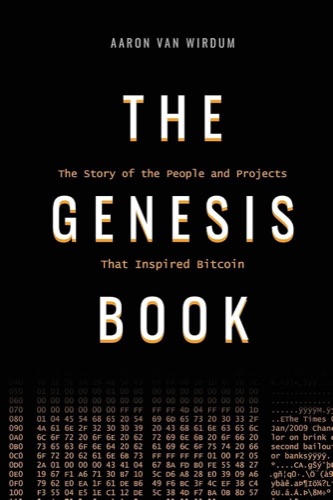 The Genesis Book ················ van Wirdum
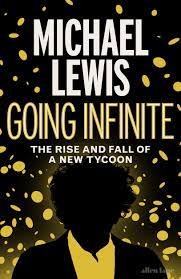 Going Infinite ······················· Lewis
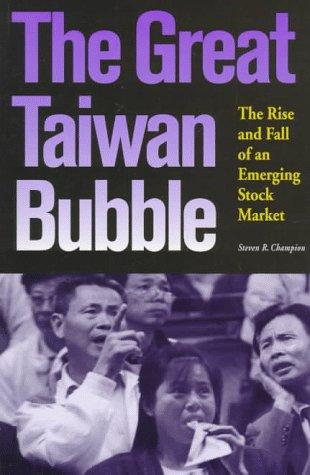 The Great Taiwan Bubble ··········· Champion
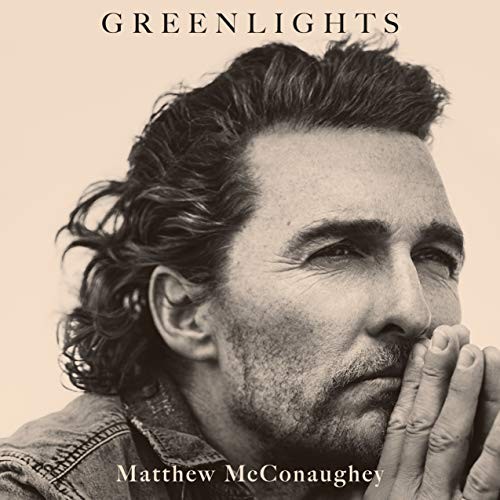 Greenlights ···················· McConaughey
 Hardball ····························· Stalk
 How Not to Be Wrong ·············· Ellenberg
 How the Internet Happened ······· McCullough
 The Infinite Machine ················· Russo
 Kings of Crypto ···················· Roberts
 Kitchen Confidential ·············· Bourdain
 Liar's Poker ························· Lewis
 The Long Good Buy ·············· Oppenheimer
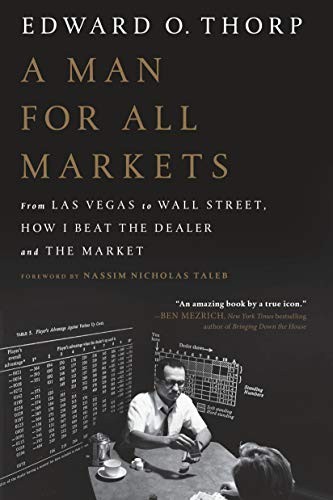 A Man for All Markets ················ Thorp
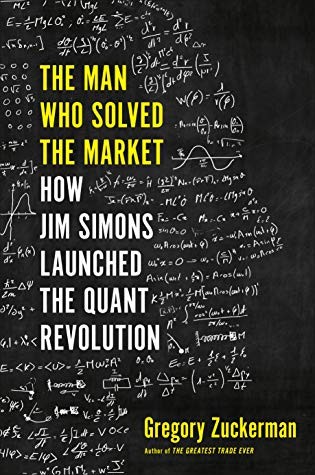 The Man Who Solved the Market ···· Zuckerman
 Man's Search for Meaning ············ Frankl
 Mastering the Market Cycle ··········· Marks
 The (Mis)Behavior of Markets ···· Mandelbrot
 More Money Than God ················ Mallaby
 The Most Important Thing ············· Marks
 Narrative Economics ················ Shiller
 The Network State ··············· Srinivasan
 On the Edge ························· Silver
 Pause to Think ······················ Lester
 Poor Charlie's Almanack ············· Munger
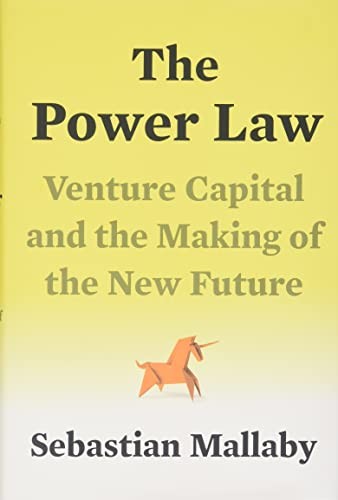 The Power Law ······················ Mallaby
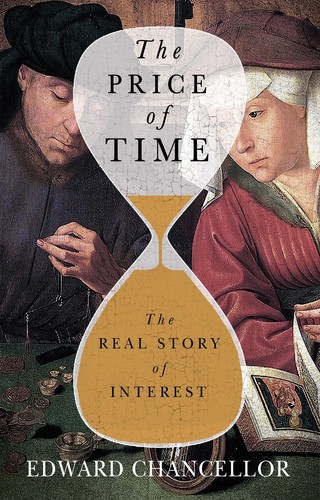 The Price of Time ··············· Chancellor
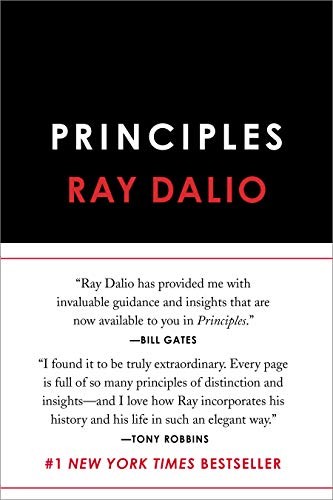 Principles ··························· Dalio
 Read Write Own ······················· Dixon
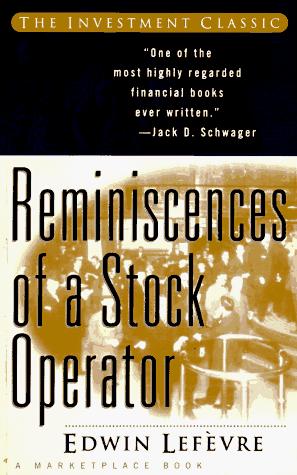 Reminiscences of a Stock Operator ·· Lefevre
 The Return of the Prodigal Son ······ Nouwen
 The Score Takes Care of Itself ······· Walsh
 Smart Brevity ····················· VandeHei
 The Sovereign Individual ·········· Davidson
 Superforecasting ··················· Tetlock
 Thinking in Bets ······················ Duke
 The Trading Game ················· Stevenson
 The Truth About Crypto ············· Edelman
 Walden ····························· Thoreau
 When Breath Becomes Air ·········· Kalanithi
 Zero to One ·························· Thiel
Against the Gods
Peter Bernstein
A history of risk. Bernstein starts with
Renaissance gamblers asking
mathematicians to settle dice disputes
and follows the thread through Pascal,
Bernoulli, Bayes, Galton and Markowitz.
Once probability existed, the future
could be measured and priced instead of
left to fate. Insurance, portfolio
theory and derivatives all fall out of
that shift.
────────────────────────────────────────
The information you have is not the
information you want. The information
you want is not the information you
need. The information you need is not
the information you can obtain. The
information you can obtain costs more
than you want to pay.
The word 'risk' derives from the early
Italian risicare, which means 'to dare'.
In this sense, risk is a choice rather
than a fate.
Our lives teem with numbers, but we
sometimes forget that numbers are only
tools. They have no soul; they may
indeed become fetishes.
Game theory says that the true source of
uncertainty lies in the intentions of
others.
Time matters most when decisions are
irreversible. And yet many irreversible
decisions must be made on the basis of
incomplete information.
Life is a collection of similarities
rather than identities; no single
observation is a perfect example of
generality.
The essence of risk management lies in
maximizing the areas where we have some
control over the outcome while
minimizing the areas where we have
absolutely no control.
Fear of harm ought to be proportional
not merely to the gravity of the harm,
but also to the probability of the
event.
The revolutionary idea that defines the
boundary between modern times and the
past is the mastery of risk: the notion
that the future is more than a whim of
the gods and that men and women are not
passive before nature.
The Alchemy of Finance
George Soros
Soros explains reflexivity: prices act
back on the fundamentals they are
supposed to reflect, so markets can
create their own booms and busts. The
middle of the book is a diary of his
1985 and 1986 trades, published with the
mistakes left in. The prose is heavy
going. It is still the closest published
record of how he thought while running
money.
────────────────────────────────────────
It is when we are unaware of what could
go wrong that we have to worry.
Scientific method seeks to understand
things as they are, while alchemy seeks
to bring about a desired state of
affairs. To put it another way, the
primary objective of science is truth —
that of alchemy, operational success.
I start from the position that every
human endeavor is flawed: if we were to
discard everything that is flawed there
would be nothing left. We must therefore
make the most of what we have. The
meaning of life consists of the flaws in
one's conceptions and what one does
about them.
What we are cannot possibly correspond
to what we think we are, but there is a
two-way interplay between the two
concepts. As we make our way in the
world our sense of self evolves. The
relationship between what we think we
are and what we are in reality is the
key to happiness.
Equilibrium itself has rarely been
observed in real life — market prices
have a notorious habit of fluctuating.
The Almanack of Naval Ravikant
Eric Jorgenson
Jorgenson collected Naval's tweets,
podcast transcripts and essays into two
halves, wealth and happiness. The wealth
half argues for equity, leverage and
specific knowledge over selling hours.
The happiness half treats calm as a
skill you practice. The whole book is
free online, which was Naval's condition
for it.
────────────────────────────────────────
A happy person isn't someone who's happy
all the time. It's someone who
effortlessly interprets events in such a
way that they don't lose their innate
peace.
If you're not willing to do a wholesale,
24/7, 100 percent swap with who that
person is, then there is no point in
being jealous.
Earn with your mind, not your time.
The more desire I have for something to
work out a certain way, the less likely
I am to see the truth.
The three big ones in life are wealth,
health, and happiness. We pursue them in
that order, but their importance is
reverse.
Escape competition through authenticity.
If you have nothing in your life, but
you have at least one person that loves
you unconditionally, it'll do wonders
for your self-esteem.
Tension is who you think you should be.
Relaxation is who you are.
Ametora
W. David Marx
Marx traces how Japan took up American
menswear after the war, studied it
obsessively, and ended up re-exporting
it in better form. Ivy style, denim and
workwear each get a full history, from
Kensuke Ishizu's VAN Jacket to Uniqlo.
Culture moves here through obsessives,
magazines and small shops, not
institutions. The title contracts
American traditional in Japanese.
────────────────────────────────────────
Japanese fashion certainly shows that
cultural behavior is not an expression
of eternal national characteristics
passed down from generation to
generation in an unbroken line. American
fashion came to Japan in the hands of
social misfits hungry for change and
business success. It then blended with
local customs and practices.
The Ametora tradition will not stand
still, but will continue to be shaped by
the passage of time.
The Anthology of Balaji
Eric Jorgenson
The same treatment Jorgenson gave Naval,
applied to Balaji Srinivasan: a decade
of talks, tweets and essays compiled
into one book. Recurring themes are
technology as the driver of history,
truth as what survives independent
checking, and exit over voice. The
network state material appears here in
early form.
────────────────────────────────────────
Distinguishing social consensus from
truth is really important because
they're not the same.
We need to evangelize technological
progress with every word and action. To
recognize that the purpose of technology
is to transcend our limits and to
motivate everything we do with this
sense of purpose. To take the winnings
from our web apps and put them toward
Mars.
Progress is abstraction.
You cannot automate something until
you've done it manually many times.
We have to start talking more about our
values than our valuations.
Any Happy Returns
Peter Oppenheimer
Oppenheimer's second book, on what he
calls super cycles, the long regimes of
rates, inflation and politics that sit
under market returns. He dates the
post-war ones and argues the post-2020
mix of higher rates, deglobalization and
AI opened a new regime. His conclusion
is that the last cycle's winners are the
wrong portfolio for this one.
Baruch: My Own Story
Bernard Baruch
Baruch's account of his first fifty
years, from a South Carolina childhood
to a seat on the Exchange and a fortune
made before 1929. He walks through the
panics he traded and the positions he
got wrong. The trading rules in the
final chapter are the part people still
quote. A second volume covers his years
advising presidents.
────────────────────────────────────────
I have found that failure is a far
better teacher than success.
I believe it is almost as important for
a man to be able to express his views as
to have them.
The simple truth is that there are no
'sure things' in the market.
You don't see any Fifth Avenue mansions
built by bears.
Two and two still make four and no one
has ever invented a way of getting
something for nothing.
The stock market is people. It is people
trying to read the future.
Only as you do know yourself can your
brain serve you as a sharp and efficient
tool. Know your own failings, passions,
and prejudices so you can separate them
from what you see.
Don't try to buy at the bottom and sell
at the top. It can't be done except by
liars.
The stock market is the thermometer and
not the fever.
During my eighty-seven years I have
witnessed technological revolutions. But
none has done away with the need for
character.
The Beginning of Infinity
David Deutsch
Deutsch argues that progress comes from
good explanations, ones that are hard to
vary and can be criticized and
corrected. He runs the idea through
physics, math, voting systems and why
Athens flourished while Sparta
stagnated. His optimism is a claim about
knowledge, that every problem is soluble
with enough of it, not a temperament.
────────────────────────────────────────
Some people become depressed at the
scale of the universe, because it makes
them feel insignificant. Other people
are relieved to feel insignificant,
which is even worse. But, in any case,
those are mistakes. Feeling
insignificant because the universe is
large has exactly the same logic as
feeling inadequate for not being a cow.
The universe is not there to overwhelm
us; it is our home, and our resource.
The bigger the better.
All fiction that does not violate the
laws of physics is fact.
Like every other destruction of
optimism, whether in a whole
civilisation or in a single individual,
these must have been unspeakable
catastrophes for those who had dared to
expect progress. For if any of those
earlier experiments in optimism had
succeeded, our species would be
exploring the stars by now, and you and
I would be immortal.
An unproblematic state is a state
without creative thought. Its other name
is death.
Without error-correction all information
processing, and hence all
knowledge-creation, is necessarily
bounded. Error-correction is the
beginning of infinity.
It is a mistake to conceive of choice
and decision-making as a process of
selecting from existing options
according to a fixed formula. That omits
the most important element of
decision-making, namely the creation of
new options.
Base metals can be transmuted into gold
by stars, and by intelligent beings who
understand the processes that power
stars, but by nothing else in the
universe.
Good political institutions are those
that make it as easy as possible to
detect whether a ruler or policy is a
mistake, and to remove rulers or
policies without violence when they are.
Objective knowledge is indeed possible:
it comes from within. It begins as
conjecture, and is then corrected by
repeated cycles of criticism, including
comparison with the evidence.
Blockchain Revolution
Don Tapscott and Alex Tapscott
The Tapscotts' 2016 survey of what
distributed ledgers might change:
payments, identity, contracts, supply
chains, government. It was written
before the ICO wave, at the top of early
enthusiasm, and reads like a catalog of
possibilities. Some held up, plenty did
not. Useful as a record of the
mainstream blockchain case at that
moment.
────────────────────────────────────────
Privacy is the foundation of free
societies.
Audit is backward-looking, and creating
a complete picture of a company's
financial health by looking at periodic
financial statements is like turning a
hamburger into a cow.
Bitcoin or other digital currency isn't
saved in a file somewhere; it's
represented by transactions recorded in
a blockchain—kind of like a global
spreadsheet or ledger.
Boom
Byrne Hobart and Tobias Huber
Hobart and Huber argue that bubbles
finance things sober capital never
would. Their case studies are the
Manhattan Project, Apollo, fracking and
Bitcoin, each driven by a small group
with a shared vision, too much money and
little oversight. On their account the
real danger is stagnation, and big
projects need some collective
overconfidence to get built.
────────────────────────────────────────
Technological innovation is more driven
by excess, exuberance, and irrationality
than by cost-benefit analyses, rational
calculation, and careful and deliberate
planning.
Given that markets and technological
systems are too complex and dynamic to
fully quantify, top-down centralization
is often doomed to fail, because
information is more often distributed
from the bottom up and at the edges of
the system.
Capitalism and Freedom
Milton Friedman
Friedman's 1962 argument that economic
freedom is a precondition for political
freedom. School vouchers, the negative
income tax, floating exchange rates and
the volunteer army all appear here years
before anyone took them seriously. The
chapter on occupational licensing has
barely aged.
────────────────────────────────────────
There is still a tendency to regard any
existing government intervention as
desirable, to attribute all evils to the
market, and to evaluate new proposals
for government control in their ideal
form, as they might work if run by able,
disinterested men free from the pressure
of special interest groups.
The power to do good is also the power
to do harm; those who control the power
today may not tomorrow; and, more
important, what one man regards as good,
another may regard as harm.
Concentrated power is not rendered
harmless by the good intentions of those
who create it.
A major source of objection to a free
economy is precisely that it gives
people what they want instead of what a
particular group thinks they ought to
want.
History only suggests that capitalism is
a necessary condition for political
freedom. Clearly it is not a sufficient
condition.
The role of government just considered
is to do something that the market
cannot do for itself, namely, to
determine, arbitrate, and enforce the
rules of the game.
It is a mark of the political freedom of
a capitalist society that men can openly
advocate and work for socialism.
The nineteenth-century liberal regarded
an extension of freedom as the most
effective way to promote welfare and
equality; the twentieth-century liberal
regards welfare and equality as either
prerequisites of or alternatives to
freedom.
The great tragedy of the drive to
centralization, as of the drive to
extend the scope of government in
general, is that it is mostly led by men
of goodwill who will be the first to rue
its consequences.
In all those cases, in accordance with
the theme of this book, increases in
economic freedom have gone hand in hand
with increases in political and civil
freedom and have led to increased
prosperity; competitive capitalism and
freedom have been inseparable.
The Changing World Order
Ray Dalio
Dalio runs the Dutch, British and
American empires through one template of
debt cycles, internal conflict and
reserve currency status. Each stage
comes with measurable markers:
education, trade share, military spend,
currency use. By his own measurements
the US is late in the cycle, with high
debt and deep internal division, while
China climbs the same chart.
────────────────────────────────────────
No system of government, no economic
system, no currency, and no empire lasts
forever, yet almost everyone is
surprised and ruined when they fail.
History has shown that we shouldn't rely
on governments to protect us
financially. On the contrary, we should
expect most governments to abuse their
privileged positions as the creators and
users of money and credit for the same
reasons that you might commit those
abuses if you were in their shoes.
Debt eats equity but central banks can
feed debt by printing money instead.
As I studied history, I saw that it
typically transpires via relatively
well-defined life cycles, like those of
organisms, that evolve as each
generation transitions to the next.
Taoism teaches that it is of paramount
importance to live in harmony with the
laws of nature.
The Creative Act
Rick Rubin
Rubin on creativity as a daily practice,
not a profession. The chapters are
short, more meditation than instruction,
on awareness, taste, and treating
finishing as its own skill. There is
almost nothing in it about music
production. It reads like what he says
to artists in the studio, most of which
amounts to getting out of the work's
way.
────────────────────────────────────────
All that matters is that you are making
something you love, to the best of your
ability, here and now.
If you have an idea you're excited about
and you don't bring it to life, it's not
uncommon for the idea to find its voice
through another maker. This isn't
because the other artist stole your
idea, but because the idea's time has
come.
Living life as an artist is a practice.
You are either engaging in the practice
or you're not. It makes no sense to say
you're not good at it. It's like saying,
'I'm not good at being a monk.' We tend
to think of the artist's work as the
output. The real work of the artist is a
way of being in the world.
Look for what you notice but no one else
sees.
We're not playing to win, we're playing
to play. And ultimately, playing is fun.
Perfectionism gets in the way of fun. A
more skillful goal might be to find
comfort in the process.
Zoom in and obsess. Zoom out and
observe. We get to choose.
In terms of priority, inspiration comes
first. You come next. The audience comes
last.
Turning something from an idea into a
reality can make it seem smaller. It
changes from unearthly to earthly. The
imagination has no limits. The physical
world does. The work exists in both.
As artists, we seek to restore our
childlike perception: a more innocent
state of wonder and appreciation not
tethered to utility or survival.
The Cryptopians
Laura Shin
Shin's reported history of early
Ethereum: eight cofounders, the split
that pushed Hoskinson out, the
crowdsale, the DAO hack and the fork
that left Ethereum Classic behind. She
spent years on interviews and documents.
The book ends with her identifying the
DAO attacker.
────────────────────────────────────────
Retirement meant that you were spending
the money you had saved up; independence
meant that all you were spending was
just the interest on your money. It was
as if your contribution to society were
complete, and you had fulfilled your
debt to this world and could now
peacefully live off the proceeds of your
work until the end of time.
The main power struggle was basically
between the business guys and the
developers over profits for themselves
versus tools to help others, greed
versus altruism. This played out as a
debate over whether to structure
Ethereum as a traditional for-profit
start-up or a decentralized network.
DeFi and the Future of Finance
Campbell Harvey, Ashwin Ramachandran and
Joey Santoro
Campbell Harvey and two practitioners
wrote the textbook version of DeFi. It
covers the primitives first, exchange,
lending, stablecoins, derivatives, then
walks through Uniswap, Aave, MakerDAO
and Compound. Their argument is that
serving another customer costs a
protocol nothing, so intermediated
finance loses on cost. Organized like a
course.
────────────────────────────────────────
DeFi is unique relative to the
traditional financial system because it
is permissionless, open access, global,
composable, and transparent. No longer
are centralized institutions needed for
basic financial actions.
Given it costs no more to provide
services to a customer with $100 or $100
million in assets, we believe that DeFi
will replace all meaningful centralized
financial infrastructure in the future.
DeFi is fundamentally a competitive
marketplace of decentralized financial
applications that function as various
financial 'primitives' such as exchange,
save, lend, and tokenize.
Digital Minimalism
Cal Newport
Newport's rule for technology: decide
what you value, keep the tools that
serve it, cut the rest. He prescribes a
thirty-day removal of optional tech,
then selective re-adoption with
conditions on each tool. The best
chapters are about solitude and what
disappears when every idle moment gets
filled.
────────────────────────────────────────
The tycoons of social media have to stop
pretending that they're friendly nerd
gods building a better world and admit
they're just tobacco farmers in T-shirts
selling an addictive product to
children. Because, let's face it,
checking your "likes" is the new
smoking.
Digital minimalism: a philosophy of
technology use in which you focus your
online time on a small number of
carefully selected and optimized
activities that strongly support things
you value, and then happily miss out on
everything else.
Simply put, humans are not wired to be
constantly wired.
Solitude deprivation: a state in which
you spend close to zero time alone with
your own thoughts and free from input
from other minds.
The urge to check Twitter or refresh
Reddit becomes a nervous twitch that
shatters uninterrupted time into shards
too small to support the presence
necessary for an intentional life.
Digital minimalism definitively does not
reject the innovations of the internet
age, but instead rejects the way so many
people currently engage with these
tools.
Where we want to be cautious is when the
sound of a voice or a cup of coffee with
a friend is replaced with 'likes' on a
post.
Flash Boys
Michael Lewis
Katsuyama notices at RBC that his orders
fade before they fill. The book follows
him tracing the cause, speed advantages
the exchanges themselves were selling,
and founding IEX with a coil of fiber
that slows every order equally. Lewis
makes the plumbing of US equities
readable: dark pools, colocation, the
tunnel Spread Networks dug for
milliseconds.
────────────────────────────────────────
The world clings to its old mental
picture of the stock market because it's
comforting; because it's so hard to draw
a picture of what has replaced it; and
because the few people able to draw it
for you have no interest in doing so.
When something becomes obvious to you,
you immediately think surely someone
else is doing this.
Shining a light creates shadows.
Every systemic market injustice arose
from some loophole in a regulation
created to correct some prior injustice.
The best way to manage people, he
thought, was to convince them that you
were good for their careers. He further
believed that the only way to get people
to believe that you were good for their
careers was actually to be good for
their careers.
It was like a broken slot machine in the
casino that pays off every time. It
would keep paying off until someone said
something about it; but no one who
played the slot machine had any interest
in pointing out that it was broken.
The U.S. stock market was now a class
system, rooted in speed, of haves and
have-nots. The haves paid for
nanoseconds; the have-nots had no idea
that a nanosecond had value.
Fooled by Randomness
Nassim Nicholas Taleb
Taleb on how much of what looks like
skill is luck. Survivorship bias hides
the traders the same strategy ruined,
and alternative histories judge a
decision by the worlds it could have
produced, not the one it happened to.
His lucky fool gets rich, keeps the
method, and eventually meets the tail of
the distribution.
────────────────────────────────────────
Heroes are heroes because they are
heroic in behavior, not because they won
or lost.
Reality is far more vicious than Russian
roulette. First, it delivers the fatal
bullet rather infrequently, like a
revolver that would have hundreds, even
thousands of chambers instead of six.
After a few dozen tries, one forgets
about the existence of a bullet, under a
numbing false sense of security.
Probability is not a mere computation of
odds on the dice or more complicated
variants; it is the acceptance of the
lack of certainty in our knowledge and
the development of methods for dealing
with our ignorance.
Those who were unlucky in life in spite
of their skills would eventually rise.
The lucky fool might have benefited from
some luck in life; over the longer run
he would slowly converge to the state of
a less-lucky idiot.
No matter how sophisticated our choices,
how good we are at dominating the odds,
randomness will have the last word.
A mistake is not something to be
determined after the fact, but in light
of the information available until that
point.
Mild success can be explainable by
skills and labor. Wild success is
attributable to variance.
My lesson from Soros is to start every
meeting at my boutique by convincing
everyone that we are a bunch of idiots
who know nothing and are mistake-prone,
but happen to be endowed with the rare
privilege of knowing it.
When things go our way we reject the
lack of certainty.
We favor the visible, the embedded, the
personal, the narrated, and the
tangible; we scorn the abstract.
The epiphany I had in my career in
randomness came when I understood that I
was not intelligent enough, nor strong
enough, to even try to fight my
emotions.
Fortune's Formula
William Poundstone
The history of the Kelly criterion.
Shannon and Thorp carried a Bell Labs
information-theory result to blackjack
and then to markets, while Samuelson
spent decades attacking the formula in
academic journals. Poundstone splices in
mob wire services and the SEC. The
lesson underneath is that sizing bets
matters more than picking them.
────────────────────────────────────────
There's no point in looking for
hundred-dollar bills in the street. Why?
Because, were there any hundred-dollar
bills, someone would already have picked
them up.
One portfolio is better than another one
when it offers higher mean return for a
given level of volatility—or a lower
volatility for a given level of return.
A smart investor should understand where
he has an edge and invest only in those
opportunities.
The Founders
Jimmy Soni
Soni's history of PayPal, from Confinity
and X.com through the eBay sale. It
covers the fraud fight with Russian
crime rings, the board coup that swapped
Musk for Thiel, and how close the
company came to dying several times. The
people involved went on to build Tesla,
SpaceX, LinkedIn, YouTube and Palantir.
────────────────────────────────────────
A lot of times, the question is harder
than the answer, and if you can properly
phrase the question, then the answer is
the easy part.
We'd also find that fraudsters were kind
of lazy, right? They want to do just the
least amount of work. So we just kind of
hoped to push them off onto our
competitors.
If the team hadn't closed that one
hundred million, there would be no
SpaceX, no LinkedIn, and no Tesla.
As hire As. Bs hire Cs.
The Four
Scott Galloway
Galloway on Amazon, Apple, Facebook and
Google. Each company, he argues,
monetized a basic human drive, and each
moat got mistaken for merit. He
overstates on purpose in places and says
so. The last chapters turn into career
advice for working in the economy the
four built.
────────────────────────────────────────
Don't follow your passion, follow your
talent. Determine what you are good at
(early), and commit to becoming great at
it. You don't have to love it, just
don't hate it. If practice takes you
from good to great, the recognition and
compensation you will command will make
you start to love it.
People who received a great deal of
attention for their looks at a young age
are more likely to opt for cosmetic
procedures when older. It's the same in
business.
Failure and invention are inseparable
twins. To invent you have to experiment,
and if you know in advance that it's
going to work, it's not an experiment.
Expect that a certain amount of failure
is out of your control, and recognize
you may need to endure it or move on.
The ultimate gift, in our digital age,
is a CEO who has the storytelling talent
to capture the imagination of the
markets while surrounding themselves
with people who can show incremental
progress against that vision each day.
It is conventional wisdom that Steve
Jobs put 'a dent in the universe.' No,
he didn't. People who get up every
morning, get their kids dressed, get
them to school, and have an irrational
passion for their kids' well-being, dent
the universe.
Luxury is irrational, which makes it the
best business in the world. In 2016
Estée Lauder was worth more than the
world's largest communications firm,
WPP. Richemont, owner of Cartier and Van
Cleef & Arpels, was worth more than
T-Mobile. LVMH commands more value than
Goldman Sachs.
It seems impossible until it isn't.
The Genesis Book
Aaron van Wirdum
Van Wirdum's history of everything
before Bitcoin: Austrian economics, the
cypherpunk mailing list, and the failed
digital cash projects, DigiCash, e-gold,
b-money, Bit Gold, Hashcash. Every
failure ruled out a design. The book
stops in 2008, at the whitepaper.
Going Infinite
Michael Lewis
Lewis had access to Bankman-Fried before
FTX collapsed and kept reporting through
the bankruptcy. The book covers Alameda,
the effective altruism scene and the
missing customer money. Critics thought
Lewis stayed too fond of his subject,
and the verdict landed after
publication. Worth reading for the
access alone.
────────────────────────────────────────
When people asked Sam for his time, they
assumed they'd posed a yes or no
question, and the noises Sam made always
sounded more like 'yes' than like 'no.'
They didn't know that inside Sam's mind
was a dial, with zero on one end and one
hundred on the other. All he had done,
when he said yes, was to assign some
non-zero probability to the proposed use
of his time.
A guy from Blackstone, the world's
biggest private investment firm, called
Sam to say that he thought a valuation
of $20 billion was too high—and that
Blackstone would invest at a valuation
of $15 billion. 'Sam said, If you think
it is too high, I'll let you short a
billion of our stock at a valuation of
twenty billion.'
Effective altruism never got its
emotional charge from the places that
charged ordinary philanthropy. What
mattered was the math.
That's it for crypto explanations for
the moment, as that's about all that Sam
Bankman-Fried knew about crypto, or for
that matter needed to know, to trade
billions of dollars' worth of it.
The Great Taiwan Bubble
Steven R. Champion
Champion documents the Taipei stock
mania of the late 1980s. The index rose
about twelvefold in four years on margin
debt and fresh liquidity, with
brokerages full before dawn, then gave
back 80 percent in eight months. A whole
bubble, inflation to collapse, contained
in one small market.
Greenlights
Matthew McConaughey
McConaughey built this from thirty-five
years of diaries. It covers the Texas
childhood, the rom-com years, the
deliberate walk away from them, and the
McConaissance that followed. His
organizing idea is catching green
lights: reading which way life is moving
and going with it.
────────────────────────────────────────
Don't walk into a place like you wanna
buy it, walk in like you own it.
I believe the truth is only offensive
when we're lying.
I have a lot of proof that the world is
conspiring to make me happy.
We cannot fully appreciate the light
without the shadows. We have to be
thrown off balance to find our footing.
It's better to jump than fall. And here
I am.
We all have scars, we gonna have more.
Rather than struggle against time and
waste it, let's dance with time and
redeem it. Cause we don't live longer
when we try not to die. We live longer
when we are too busy living.
I never wrote things down to remember; I
always wrote things down so I could
forget.
I'm not perfect; no, I step in shit all
the time and recognize it when I do.
I've just learned how to scrape it off
my boots and carry on.
Persist, pivot, or concede. It's up to
us, our choice every time.
Sometimes which choice you make is not
as important as making a choice and
committing to it.
Don't create imaginary constraints. Who
are we to think we don't deserve these
fortunes when they're in our grasp? Who
are we to think we haven't earned them?
If we stay and process within ourselves,
in the joy of the doing, we will never
choke at the finish line.
Hardball
George Stalk and Rob Lachenauer
Stalk and Lachenauer on using
competitive advantage without apology.
The five tactics: attack rivals' profit
sanctuaries, copy good ideas openly,
mislead competitors, concentrate force,
raise their costs. The case studies are
from the early 2000s and show their age.
The stance is the durable part.
────────────────────────────────────────
There are many ways to win at hardball,
and every winner has his own style of
play.
Hardball leaders think of themselves as
being in a perpetual turnaround. Even if
the company is already successful, they
continue to try to make it better, to
find new sources of competitive
advantage, answer new threats, serve new
markets, or solve whatever new
challenges arise.
Hardball players have an intellectual
toughness that enables them to face
facts and see reality. They are always
dissatisfied with the status quo, no
matter how fine things may seem, and
they have the will to catalyze change.
They're tough, but they're not bullies.
Make all efforts fast, focused, and
fundamental. Every project undertaken in
a turnaround should deliver
payback—demonstrable and quantifiable—in
twelve to eighteen months.
How Not to Be Wrong
Jordan Ellenberg
Ellenberg shows mathematical thinking
working on ordinary questions. The
opening example is Abraham Wald and the
bomber armor: put it where the returning
planes have no holes. From there it goes
through linearity, inference,
expectation and regression. Almost none
of it needs formulas.
────────────────────────────────────────
I think we need more math majors who
don't become mathematicians. More math
major doctors, more math major high
school teachers, more math major CEOs,
more math major senators. But we won't
get there unless we dump the stereotype
that math is only worthwhile for kid
geniuses.
A basic rule of mathematical life: if
the universe hands you a hard problem,
try to solve an easier one instead, and
hope the simple version is close enough
to the original problem that the
universe doesn't object.
Knowing mathematics is like wearing a
pair of X-ray specs that reveal hidden
structures underneath the messy and
chaotic surface of the world.
Working an integral or performing a
linear regression is something a
computer can do quite effectively.
Understanding whether the result makes
sense—or deciding whether the method is
the right one to use in the first
place—requires a guiding human hand. A
math course that fails to do so is
essentially training the student to be a
very slow, buggy version of Microsoft
Excel.
Dividing one number by another is mere
computation; knowing what to divide by
what is mathematics.
Improbable things happen a lot.
A mathematician is always asking, 'What
assumptions are you making? And are they
justified?'
One of the most painful parts of
teaching mathematics is seeing students
damaged by the cult of the genius. The
genius cult tells students it's not
worth doing mathematics unless you're
the best at mathematics, because those
special few are the only ones whose
contributions matter.
If gambling is exciting, you're doing it
wrong.
Genius is a thing that happens, not a
kind of person.
How the Internet Happened
Brian McCullough
McCullough's history of the consumer
internet, Netscape's IPO to the iPhone.
Browser wars, portals, the crash,
Google's ad auction, Facebook's feed. At
every stage the company that figured out
the business model beat the company with
the better technology. He ran the
Internet History Podcast and the
sourcing shows it.
────────────────────────────────────────
Silicon Valley has always been equal
parts egghead libertarianism and
acid-tinged hippie romanticism. For the
libertarians the Internet was great
because it had few rules and no
governance. For the hippies, the
Internet promised free expression and a
democratization of ideas.
They thought they'd make revenues from
people making purchases. But they
discovered people were less interested
in shopping on the service than
communicating. And they didn't know how
to charge for communications.
Netscape did not originate the obsession
with platforms, but it would provide the
template.
The Infinite Machine
Camila Russo
Russo covers Ethereum's founding: the
whitepaper Vitalik wrote at nineteen,
the Miami announcement, the crowdsale,
the launch. Faster and lighter than
Shin's book, and it stops as the ICO
wave peaks. Good on how improvised it
all was. The foundation nearly went
broke before the network shipped.
────────────────────────────────────────
The inventors of JavaScript never
intended for someone to build Gmail, or
Facebook or Bitcoin wallets on top of
it. We don't know what people will build
on top of Ethereum, but the idea is that
they will be decentralized and
unstoppable applications.
Ethereum isn't only a network for its
digital currency, ether. It's meant to
be the base layer for developers to
build whatever application they can
dream of, including issuing their own
coin.
Ethereum wasn't just another Bitcoin
project. It was the most ambitious
cryptocurrency project since Bitcoin.
Proof-of-work is aimed at deterring
attacks or spam in a network by
requiring the users of the service to do
some work, so that it would be
economically inviable to create useless
or malicious data.
Kings of Crypto
Jeff John Roberts
Roberts follows Coinbase from Y
Combinator through the 2018 crash to the
eve of its IPO. Armstrong's bet was that
banking relationships, compliance and
uptime would bring crypto to normal
people. The friction between that
strategy and the culture it grew out of
runs through the book.
Kitchen Confidential
Anthony Bourdain
Bourdain on twenty-five years in
professional kitchens: the line, the
crews, the drugs, the craft. Publishing
it broke an unwritten rule about what
stays in the kitchen, and it made him
famous at forty-four. It doubles as
labor writing, and it is why a
generation stopped ordering fish on
Mondays.
────────────────────────────────────────
Your body is not a temple, it's an
amusement park. Enjoy the ride.
Do we really want to travel in
hermetically sealed popemobiles through
the rural provinces of France, Mexico
and the Far East, eating only in Hard
Rock Cafes and McDonalds? Or do we want
to eat without fear, tearing into the
local stew, the humble taqueria's
mystery meat, the sincerely offered gift
of a lightly grilled fish head? I know
what I want. I want it all. I want to
try everything once.
No one understands and appreciates the
American Dream of hard work leading to
material rewards better than a
non-American.
Skills can be taught. Character you
either have or you don't have.
Don't lie about it. You made a mistake.
Admit it and move on. Just don't do it
again. Ever.
Good food is very often, even most
often, simple food.
Assume the worst. About everybody. But
don't let this poisoned outlook affect
your job performance. Let it all roll
off your back. Ignore it. Be amused by
what you see and suspect.
I've long believed that good food, good
eating, is all about risk. Whether we're
talking about unpasteurized Stilton, raw
oysters or working for organized crime
'associates,' food, for me, has always
been an adventure.
Garlic is divine. Avoid at all costs
that vile spew you see rotting in oil in
screwtop jars. Too lazy to peel fresh?
You don't deserve to eat garlic.
It's been an adventure. We took some
casualties over the years. Things got
broken. Things got lost. But I wouldn't
have missed it for the world.
Liar's Poker
Michael Lewis
Lewis on Salomon Brothers in the 1980s:
the training program, the trading floor,
Ranieri's mortgage desk inventing a
market. He meant it as a warning about
Wall Street. He has said since that
students kept reading it as a career
guide.
────────────────────────────────────────
Those who know don't tell and those who
tell don't know.
The men on the trading floor may not
have been to school, but they have
Ph.D.'s in man's ignorance.
He was blessed with an unconventional
mind, which overcame his conventional
middle-class upbringing.
I thought instead of a good rule for
survival on Wall Street: Never agree to
anything proposed on someone else's boat
or you'll regret it in the morning.
The first thing you learn on the trading
floor is that when large numbers of
people are after the same commodity, be
it a stock, a bond, or a job, the
commodity quickly becomes overvalued.
If there was a single lesson I took away
from Salomon Brothers, it is that rarely
do all parties win. The nature of the
game is zero sum.
Risk, I had learned, was a commodity in
itself.
The Long Good Buy
Peter Oppenheimer
Oppenheimer breaks equity cycles into
four phases, hope, growth, optimism,
despair, with typical lengths, returns
and valuation moves for each. Bear
markets get their own taxonomy,
cyclical, event-driven, structural, with
different depths and recovery times. A
framework book, written to be reused
rather than read once.
────────────────────────────────────────
A study by the Bank for International
Settlements, which systematically
examines the experience of 34 countries
over the past 40 years, finds that rapid
debt growth is the single best leading
indicator of financial crises.
A Man for All Markets
Edward O. Thorp
Thorp's autobiography. He counted cards
at blackjack and published the system,
built the first wearable computer to
beat roulette, then ran Princeton
Newport, the first quant fund. He also
worked out Madoff was a fraud in 1991,
and nobody acted on it. A lifetime of
finding edges, sizing them, and quitting
when they closed.
────────────────────────────────────────
In the abstract, life is a mixture of
chance and choice. Chance can be thought
of as the cards you are dealt in life.
Choice is how you play them.
Life is like reading a novel or running
a marathon. It's not so much about
reaching a goal but rather about the
journey itself and the experiences along
the way.
To beat the market, focus on investments
well within your knowledge and ability
to evaluate, your 'circle of
competence.' Be sure your information is
current, accurate, and essentially
complete. Finally, don't bet on an
investment unless you can demonstrate by
logic, and if appropriate by track
record, that you have an edge.
This phenomenon has been called the
wisdom of crowds. But like most
simplifications, this has a flip side. I
call the flip side to the wisdom of
crowds the lunacy of lemmings.
The Man Who Solved the Market
Gregory Zuckerman
Zuckerman's book on Renaissance
Technologies, reported against the
firm's wishes. Simons hired codebreakers
and speech-recognition people instead of
finance people, and Medallion returned
66 percent gross a year for three
decades. A long subplot follows Bob
Mercer's money moving into politics.
Nobody has gotten closer to how the fund
works.
────────────────────────────────────────
Work with the smartest people you can,
hopefully smarter than you. Be
persistent, don't give up easily. Be
guided by beauty. It can be the way a
company runs, or the way an experiment
comes out, or the way a theorem comes
out, but there's a sense of beauty when
something is working well, almost an
aesthetic to it.
We're right 50.75 percent of the time,
but we're 100 percent right 50.75
percent of the time. You can make
billions that way.
Simons and his team are among the most
secretive traders Wall Street has
encountered, loath to drop even a hint
of how they'd conquered financial
markets, lest a competitor seize on any
clue.
Scientists and mathematicians are
trained to dig below the surface of the
chaotic, natural world to search for
unexpected simplicity, structure, and
even beauty.
Any time you hear financial experts
talking about how the market went up
because of such and such—remember it's
all nonsense.
It's one thing to have good ideas, it's
another to recognize when others do.
Man's Search for Meaning
Viktor Frankl
Frankl survived Auschwitz and wrote this
in nine days in 1946. The first half
describes camp life as a psychologist
saw it, including what the prisoners who
held up had in common. The second half
presents logotherapy, his school of
psychiatry built on the claim that
people run on meaning, not pleasure or
power.
────────────────────────────────────────
Everything can be taken from a man but
one thing: the last of the human
freedoms—to choose one's attitude in any
given set of circumstances, to choose
one's own way.
When we are no longer able to change a
situation, we are challenged to change
ourselves.
But there was no need to be ashamed of
tears, for tears bore witness that a man
had the greatest of courage, the courage
to suffer.
In some ways suffering ceases to be
suffering at the moment it finds a
meaning, such as the meaning of a
sacrifice.
So live as if you were living already
for the second time and as if you had
acted the first time as wrongly as you
are about to act now!
No man should judge unless he asks
himself in absolute honesty whether in a
similar situation he might not have done
the same.
Mastering the Market Cycle
Howard Marks
Marks on reading where you are in the
cycle instead of predicting where it
goes. Credit and psychology swing wider
than fundamentals, and each extreme sets
up the reversal. The advice that falls
out is to calibrate aggression to your
position in the cycle, not to forecasts.
It expands the cycle memos behind his
first book.
────────────────────────────────────────
Skepticism and pessimism aren't
synonymous. Skepticism calls for
pessimism when optimism is excessive.
But it also calls for optimism when
pessimism is excessive.
The three stages of a bull market: the
first stage, when only a few unusually
perceptive people believe things will
get better; the second stage, when most
investors realize that improvement is
actually taking place; and the third
stage, when everyone concludes things
will get better forever.
The superior investor is mature,
rational, analytical, objective and
unemotional.
There are three ingredients for
success—aggressiveness, timing and
skill—and if you have enough
aggressiveness at the right time, you
don't need that much skill.
Like so many other things in the
investment world that might be tried on
the basis of certitude and precision,
waiting for the bottom to start buying
is a great example of folly. So if
targeting the bottom is wrong, when
should you buy? The answer's simple:
when price is below intrinsic value.
It follows that risk is high when
investors feel risk is low. And risk
compensation is at a minimum just when
risk is at a maximum, meaning risk
compensation is most needed. So much for
the rational investor.
The safest and most rewarding time to
buy usually comes when everyone is
convinced there's no hope.
In investing, there is nothing that
always works, since the environment is
always changing, and investors' efforts
to respond to the environment cause it
to change further.
Success doesn't lie in being right, but
rather in being more right than others.
One doesn't have to be right in order to
be successful: just less wrong than
others.
The (Mis)Behavior of Markets
Benoit Mandelbrot
Mandelbrot on why the standard model of
markets is wrong. Real price series have
fat tails, volatility that clusters, and
patterns that repeat across time scales,
none of which a bell curve produces. He
proposed fractal models instead and
finance mostly ignored him. After 2008
the book got harder to dismiss.
────────────────────────────────────────
The brain highlights what it imagines as
patterns; it disregards contradictory
information. Human nature yearns to see
order and hierarchy in the world. It
will invent it where it cannot find it.
For a complex natural shape, dimension
is relative. It varies with the
observer. The same object can have more
than one dimension, depending on how you
measure it.
Stock prices are not independent.
Today's action can, at least slightly,
affect tomorrow's action. The standard
model is, again, wrong.
The Efficient Market Hypothesis is no
more than that, a hypothesis. Many a
grand theory has died under the
onslaught of real data.
A key point in my work: randomness has
more than one state, or form. One is the
most familiar and manageable form of
chance, which I call mild. It is the
randomness of a coin toss, the static of
a badly tuned radio.
At the opposite extreme is what I call
wild randomness. This is far more
irregular, more unpredictable. It is the
variation of the Cornish
coastline—savage promontories, craggy
rocks, and unexpectedly calm bays. The
fluctuation from one value to the next
is limitless and frightening.
More Money Than God
Sebastian Mallaby
Mallaby's history of hedge funds. A.W.
Jones invents the leveraged long-short
partnership, then Soros, Steinhardt,
Tiger, LTCM and the quants each find an
inefficiency and get paid until the
market learns it. Against the post-2008
mood, he concludes funds mostly absorb
risk, and that they are small enough to
fail, which the banks were not.
────────────────────────────────────────
Capitalism works only when institutions
are forced to absorb the consequences of
the risks that they take on. When banks
can pocket the upside while spreading
the cost of their failures, failure is
almost certain.
All new markets are inefficient at
first.
Let specialists obsess about minutiae.
Soros's motto was 'Invest first,
investigate later.'
Because they mark all their assets to
market and live in constant fear of
margin calls from their brokers, hedge
funds generally monitor risk better and
recognize setbacks faster than rivals.
Every evening I would close my eyes in a
quiet place in my apartment. I would
visualize the opening and walk myself
through the day and imagine the
different emotional states the market
would go through. Then when you get
there, you are ready for it. You have
been there before.
The Most Important Thing
Howard Marks
Marks's client memos reorganized into a
book. Second-level thinking, the
difference between price and value, risk
as permanent loss instead of volatility,
buying well as the whole game. Every
chapter is titled the most important
thing because he kept using the phrase
in memos until it became the structure.
────────────────────────────────────────
I like to say, 'Experience is what you
got when you didn't get what you
wanted.'
There are old investors, and there are
bold investors, but there are no old
bold investors.
Investment success doesn't come from
'buying good things,' but rather from
'buying things well.'
'Prices are too high' is far from
synonymous with 'the next move will be
downward.' Things can be overpriced and
stay that way for a long time, or become
far more so.
Being too far ahead of your time is
indistinguishable from being wrong.
There's a big difference between
probability and outcome. Probable things
fail to happen—and improbable things
happen—all the time.
We have to practice defensive investing,
since many of the outcomes are likely to
go against us.
Investing is a popularity contest, and
the most dangerous thing is to buy
something at the peak of its popularity.
Here's the key to understanding risk:
it's largely a matter of opinion.
There's only one way to describe most
investors: trend followers. Superior
investors are the exact opposite.
Narrative Economics
Robert Shiller
Shiller treats stories as economic
variables. Narratives like house prices
only go up spread through a population
the way infections do, with the same
take-off and decay curves, and move
spending while they run. He wants
economists to track them with epidemic
tools. The historical chapters trace
individual narratives, the Laffer curve
among them, back to their origins.
────────────────────────────────────────
Narratives are major vectors of rapid
change in culture, in zeitgeist, and in
economic behavior.
We need to incorporate the contagion of
narratives into economic theory.
Otherwise, we remain blind to a very
real, very palpable, very important
mechanism for economic change, as well
as a crucial element for economic
forecasting.
Trying to understand major economic
events by looking only at data on
changes in economic aggregates, such as
gross domestic product, wage rates,
interest rates, and tax rates, runs the
risk of missing the underlying
motivations for change.
Rumor is the ancient Latin word for
contagious narrative.
The Network State
Balaji Srinivasan
Balaji's plan for starting countries the
way you start companies: form an aligned
online community, prove it can act
together, crowdfund territory, then seek
recognition. His one-sentence definition
runs a full paragraph, and he means
every clause of it. Published free
online with dashboards tracking live
attempts.
────────────────────────────────────────
A network state is a social network with
a moral innovation, a sense of national
consciousness, a recognized founder, a
capacity for collective action, an
in-person level of civility, an
integrated cryptocurrency, a consensual
government limited by a social smart
contract, an archipelago of crowdfunded
physical territories, a virtual capital,
and an on-chain census that proves a
large enough population, income, and
real-estate footprint to attain a
measure of diplomatic recognition.
The short version is that if a tech
company is about technological
innovation first, and company culture
second, a startup society is the
reverse. It's about community culture
first, and technological innovation
second.
The libertarian cycle starts with a
group of ideological libertarians that
end up building a bureaucratic state.
The mere existence of successful
parallel systems in Taiwan, Hong Kong,
and especially Singapore is what drove
Deng Xiaoping to adopt capitalism.
On the Edge
Nate Silver
Silver's map of the people he calls the
River: poker pros, quants, VCs, crypto
traders and effective altruists, all
thinking in expected value. He contrasts
them with the Village of media and
government, which he says keeps
misreading them. Sections on casinos,
SBF and AI risk. He writes as a member,
not a visitor.
────────────────────────────────────────
The River is a sprawling ecosystem of
like-minded people that includes
everyone from low-stakes poker pros just
trying to grind out a living to crypto
kings and venture-capital billionaires.
It is a way of thinking and a mode of
life.
Treat other people as intelligent and
capable of reasonable strategic
behavior. The world is dynamic, and
although people may not be strictly
rational, they're usually smart about
adapting to their situation and
achieving the things that matter most to
them. Play the long game.
Successful risk-takers take a
raise-or-fold attitude toward life. They
abhor mediocrity and they know when to
quit.
A bet is a tax on bullshit.
Pause to Think
Jaime Lester
Lester taught this material at Columbia
Business School after years at SAC and
Greenlight. It is a working manual of
thirty-odd mental models for decisions,
learning and data, each with templates
to fill in. The pause in the title is
the method itself: stop before deciding
and pick the frame deliberately.
Poor Charlie's Almanack
Charlie Munger
Munger's talks and speeches, collected
by Kaufman. The core idea is the
latticework: use the main models of many
disciplines at once, because reality is
not divided by department. The
psychology of human misjudgment talk
lists his twenty-five biases, delivered
before behavioral economics was a field.
Heavy, expensive, and mostly read as a
PDF.
────────────────────────────────────────
In my whole life, I have known no wise
people (over a broad subject matter
area) who didn't read all the time —
none, zero.
Spend each day trying to be a little
wiser than you were when you woke up.
How to find a good spouse? The best
single way is to deserve a good spouse.
Acquire worldly wisdom and adjust your
behavior accordingly. If your new
behavior gives you a little temporary
unpopularity with your peer group, then
to hell with them.
It takes character to sit with all that
cash and to do nothing. I didn't get to
where I am by going after mediocre
opportunities.
The best armour of old age is a well
spent life perfecting it.
I think that, every time you see the
word EBITDA, you should substitute the
words 'bullshit earnings.'
It's the work on your desk. Do well with
what you already have and more will come
in.
The Power Law
Sebastian Mallaby
Mallaby's history of venture capital,
ARDC and the traitorous eight through
Sequoia, Kleiner, Accel, a16z and
SoftBank. A few investments return
everything, so the industry's habits,
big swings, obsessive networking,
follow-on rights, all come from that
distribution. The Sequoia chapters draw
on unusual access and cover fifty years
of the firm.
────────────────────────────────────────
It is the nature of the venture-capital
game that most attempts at discovery
fail, but a very few succeed at such a
scale that they more than make up for
everything else. That extreme ratio of
success and failure is the power law
that drives the VC business, all of
Silicon Valley, the wider tech sector,
and, by extension, the world.
You succeed in venture capital by
backing the right deals, not by haggling
over valuations.
Investors who focus on currencies,
bonds, and stock markets generally
assume a normal distribution of price
changes: values jiggle up and down, but
extreme moves are unusual.
Thiel had the guts to act on his
understanding of the power law by
betting big at the right moments.
Because only a handful of startups would
grow exponentially, there was no point
getting excited about opportunities that
seemed merely solid; in venture, the
median investment was a failure.
Through an evolutionary process of
trial, failure, and occasional
breakthroughs, the group may advance
faster than the individual.
The Price of Time
Edward Chancellor
Chancellor's history of interest,
Babylonian grain loans to the zero-rate
decade. Interest prices time, and
suppressing it distorts everything
downstream: bubbles, zombie companies,
yield-chasing, wider wealth gaps. The
final section goes after the post-2008
policy experiment directly. It came out
in 2022, months before rates rose.
────────────────────────────────────────
As Bastiat understood, a very low rate
of interest may benefit the rich, who
have access to credit, more than the
poor.
When interest rates are pushed too low,
credit takes off and bad investments
('malinvestment') abound.
The most encompassing view of interest
is contained in the notion of interest
as the 'time value of money'.
Principles
Ray Dalio
Dalio's rulebook, written for
Bridgewater and published whole. Radical
truth and transparency,
believability-weighted votes, pain plus
reflection equals progress. The opening
memoir explains where the rules came
from, including the 1982 depression call
that nearly ended the firm. The rest is
numbered principles, the actual
management system.
────────────────────────────────────────
If you're not failing, you're not
pushing your limits, and if you're not
pushing your limits, you're not
maximizing your potential.
I learned that if you work hard and
creatively, you can have just about
anything you want, but not everything
you want. Maturity is the ability to
reject good alternatives in order to
pursue even better ones.
Look for people who have lots of great
questions. Smart people are the ones who
ask the most thoughtful questions, as
opposed to thinking they have all the
answers. Great questions are a much
better indicator of future success than
great answers.
The happiest people discover their own
nature and match their life to it.
Having the basics—a good bed to sleep
in, good relationships, good food, and
good sex—is most important, and those
things don't get much better when you
have a lot of money or much worse when
you have less.
Listening to uninformed people is worse
than having no answers at all.
I just want to be right—I don't care if
the right answer comes from me.
Every time you confront something
painful, you are at a potentially
important juncture in your life—you have
the opportunity to choose healthy and
painful truth or unhealthy but
comfortable delusion.
If you can't successfully do something,
don't think you can tell others how it
should be done.
I saw that to do exceptionally well you
have to push your limits and that, if
you push your limits, you will crash and
it will hurt a lot. You will think you
have failed—but that won't be true
unless you give up.
Because our educational system is hung
up on precision, the art of being good
at approximations is insufficiently
valued. This impedes conceptual
thinking.
Read Write Own
Chris Dixon
Dixon's argument that blockchains are
the internet's third phase: first
reading, then writing on platforms, now
owning. Protocol networks let value stay
with users and builders instead of the
aggregator. The chapters on the platform
lifecycle, attract everyone, then
extract from them, carry the argument.
The a16z crypto thesis at book length.
────────────────────────────────────────
Hobbies are what the smartest people
spend time on when they aren't
constrained by near-term financial
goals. I like to say that what the
smartest people do on the weekends is
what everyone else will do during the
week in ten years.
We wanted flying cars, instead we got
Zoom.
In these systems, money and power flow
to the network center, to companies that
own the networks, and away from users
and developers at the network edges.
The real potential in using blockchains
is to build better networks, and
therefore a better internet.
Reminiscences of a Stock Operator
Edwin Lefevre
Livermore's career, thinly fictionalized
as Larry Livingston, serialized in 1922.
Bucket shops, corners, the 1907 panic,
fortunes made and lost more than once. A
century on it is still the most quoted
book about speculation. Most trading
aphorisms in circulation come from it.
────────────────────────────────────────
The nature of the game as it is played
is such that the public should realize
that the truth cannot be told by the few
who know.
There is nothing like losing all you
have in the world for teaching you what
not to do. And when you know what not to
do in order not to lose money, you begin
to learn what to do in order to win.
The sucker has always tried to get
something for nothing, and the appeal in
all booms is always frankly to the
gambling instinct aroused by cupidity
and spurred by a pervasive prosperity.
A man cannot be convinced against his
own convictions, but he can be talked
into a state of uncertainty and
indecision, which is even worse, for
that means that he cannot trade with
confidence and comfort.
That is about all I have learned—to
study general conditions, to take a
position and stick to it.
A stock operator has to fight a lot of
expensive enemies within himself.
Men who can both be right and sit tight
are uncommon. I found it one of the
hardest things to learn. But it is only
after a stock operator has firmly
grasped this that he can make big money.
The Return of the Prodigal Son
Henri J. M. Nouwen
Nouwen spent years with Rembrandt's
painting of the parable and wrote this
after leaving Harvard for a disability
community. He takes the figures one at a
time: the younger son who left, the
elder son whose resentment stayed home,
the father. He lands on the elder son as
the harder problem, and on becoming the
father as the assignment.
────────────────────────────────────────
I am the prodigal son every time I
search for unconditional love where it
cannot be found.
Resentment and gratitude cannot coexist,
since resentment blocks the perception
and experience of life as a gift.
The question is not 'How am I to find
God?' but 'How am I to let myself be
found by him?'
Here the mystery of life is unveiled: I
am loved so much that I am left free to
leave home. The blessing is there from
the beginning.
God's vision is not that of a
stereotypical landowner but rather that
of an all-giving and forgiving father
who does not measure out his love to his
children according to how well they
behave.
The Score Takes Care of Itself
Bill Walsh
Walsh took the 49ers from 2-14 to a
Super Bowl in three seasons, and this is
his account of how. The standard of
performance came first: precise
behaviors required of everyone down to
the receptionists, installed before any
results existed. He is candid about the
cost, including his own burnout.
Assembled from his notes with his son
and Steve Jamison.
────────────────────────────────────────
Champions behave like champions before
they're champions; they have a winning
standard of performance before they are
winners.
A good leader is always learning. The
great leaders start learning young and
continue until their last breath.
For me the starting point for
everything—before strategy, tactics,
theories, managing, organizing,
philosophy, methodology, talent, or
experience—is work ethic.
Here's a good question to write on a
Post-it Note and put on your desk: 'What
assets do we have right now that we're
not taking advantage of?'
Others follow you based on the quality
of your actions rather than the
magnitude of your declarations.
Constructive criticism is a powerful
instrument essential for improving
performance. Positive support can be
equally productive. Used together by a
skilled leader they become the key to
maximum results.
The culture precedes positive results.
It doesn't get tacked on as an
afterthought on your way to the victory
stand.
Like water, many decent individuals will
seek lower ground if left to their own
inclinations.
Smart Brevity
Jim VandeHei, Mike Allen and Roy
Schwartz
The Axios founders' system for short
writing: one point per piece, a strong
first sentence, tell the reader why it
matters, cut everything else. It came
out of newsroom data on where readers
stop. The book uses its own format, so
it takes about an hour.
────────────────────────────────────────
Brevity is confidence. Length is fear.
Never in the history of humanity have we
vomited more words in more places with
more velocity.
If there is one thing you take away from
this book, it is this: learn to identify
and trumpet ONE thing you want people to
know. And do it in ONE strong sentence.
Or no one will ever remember it.
Write—then go back and kill at least
half the words. It winds up sharper
every time.
The Sovereign Individual
James Dale Davidson and William
Rees-Mogg
Davidson and Rees-Mogg, writing in 1997,
predicted that microprocessing would
break the nation-state's monopoly on
money and protection and create a mobile
elite that governments compete to host.
Digital cash, remote work and the
state's response to both are all in
there. The timing was off and parts are
strange. It became a founding text for a
large slice of crypto.
────────────────────────────────────────
To dare a thought is to risk being
wrong.
Incomes will become more unequal within
jurisdictions and more equal between
them.
The basic causes of change are precisely
those that are not subject to conscious
control.
Governments will ultimately have little
choice but to treat populations in
territories they serve more like
customers, and less in the way that
organized criminals treat the victims of
a shakedown racket.
The cybereconomy, rather than China,
could well be the greatest economic
phenomenon of the next thirty years.
The idea of property emerged as an
inevitable consequence of farming.
Other things being equal, the more
widely dispersed key technologies are,
the more widely dispersed power will be,
and the smaller the optimum scale of
government.
When technology is mobile, and
transactions occur in cyberspace, as
they increasingly will do, governments
will no longer be able to charge more
for their services than they are worth
to the people who pay for them.
Faster than all but a few now imagine,
microprocessing will subvert and destroy
the nation-state, creating new forms of
social organization in the process.
The most important causes of change are
not to be found in political manifestos
or in the pronouncements of dead
economists, but in the hidden factors
that alter the boundaries where power is
exercised. Often, subtle changes in
climate, topography, microbes, and
technology alter the logic of violence.
Superforecasting
Philip Tetlock and Dan Gardner
Tetlock ran the Good Judgment Project,
an IARPA tournament where volunteer
forecasters beat intelligence analysts
who had classified information. The best
two percent shared habits, not
credentials: small frequent updates,
precise probabilities, decomposing
questions, treating beliefs as testable.
The book documents the tournament and
teaches the habits.
────────────────────────────────────────
For superforecasters, beliefs are
hypotheses to be tested, not treasures
to be guarded.
For scientists, not knowing is exciting.
It's an opportunity to discover; the
more that is unknown, the greater the
opportunity.
Consensus is not always good;
disagreement not always bad. If you do
happen to agree, don't take that
agreement—in itself—as proof that you
are right. Never stop doubting.
If you have to plan for a future beyond
the forecasting horizon, plan for
surprise. That means planning for
adaptability and resilience.
It was the absence of doubt—and
scientific rigor—that made medicine
unscientific and caused it to stagnate
for so long.
Thinking in Bets
Annie Duke
Duke, a twenty-year poker pro with a
cognitive science background, on
decisions under uncertainty. Her central
rule is to judge the process, not the
outcome, because luck sits between the
two; grading a decision by its result
she calls resulting. The working tools
are premortems, truthseeking groups, and
asking wanna bet.
────────────────────────────────────────
What makes a decision great is not that
it has a great outcome. A great decision
is the result of a good process, and
that process must include an attempt to
accurately represent our own state of
knowledge. That state of knowledge, in
turn, is some variation of 'I'm not
sure.'
In most of our decisions, we are not
betting against another person. Rather,
we are betting against all the future
versions of ourselves that we are not
choosing.
Improving decision quality is about
increasing our chances of good outcomes,
not guaranteeing them.
Thinking in bets starts with recognizing
that there are exactly two things that
determine how our lives turn out: the
quality of our decisions and luck.
Learning to recognize the difference
between the two is what thinking in bets
is all about.
Despite the popular wisdom that we
achieve success through positive
visualization, it turns out that
incorporating negative visualization
makes us more likely to achieve our
goals.
The secret is to make peace with walking
around in a world where we recognize
that we are not sure and that's okay.
Even research communities of highly
intelligent and well-meaning individuals
can fall prey to confirmation bias, as
IQ is positively correlated with the
number of reasons people find to support
their own side in an argument.
Outcomes don't tell us what's our fault
and what isn't, what we should take
credit for and what we shouldn't. Unlike
in chess, we can't simply work backward
from the quality of the outcome to
determine the quality of our beliefs or
decisions.
Truthseeking, the desire to know the
truth regardless of whether the truth
aligns with the beliefs we currently
hold, is not naturally supported by the
way we process information. Instead of
altering our beliefs to fit new
information, we do the opposite,
altering our interpretation of that
information to fit our beliefs.
Chess, for all its strategic complexity,
isn't a great model for decision-making
in life, where most of our decisions
involve hidden information and a much
greater influence of luck.
The Trading Game
Gary Stevenson
Stevenson traded short sterling at Citi,
an east London scholarship kid who
became the desk's biggest earner by
betting rates would stay low. His
reasoning was that inequality had
hollowed out spending, so no recovery
was coming. The book covers the trade,
the money, the breakdown, and how hard
the bank made it to leave.
────────────────────────────────────────
The rich get the assets, the poor get
the debt, and then the poor have to pay
their whole salary to the rich every
year just to live in a house. The rich
use that money to buy the rest of the
assets from the middle class and then
the problem gets worse every year.
The best job a concert pianist can get
nowadays is trader for Citibank. It pays
very well.
I'd believed it when the teachers back
at school had told me: study hard and do
well in your exams and you will get a
good job.
The Truth About Crypto
Ric Edelman
Edelman wrote this for financial
advisors. It explains bitcoin,
blockchains, NFTs and custody, then
makes the allocation case, around one
percent, argued from low correlation and
asymmetric upside. The specifics age
fast, as with every crypto book. The
allocation framework is the part that
lasts.
────────────────────────────────────────
The more someone understands about
finance, the likelier it is that they
will have difficulty understanding
cryptocurrency.
Walden
Henry David Thoreau
Thoreau's two years, two months and two
days at Walden Pond, published 1854. The
first chapter itemizes what his house
and food cost, down to the half cent, to
show how little a life requires. The
rest reports what he did with the time
that freed up. Remembered as nature
writing, though the longest chapter is
the one about money.
────────────────────────────────────────
Our life is frittered away by detail.
Simplify, simplify.
The cost of a thing is the amount of
life which must be exchanged for it.
Rather than love, than money, than fame,
give me truth.
I learned this, at least, by my
experiment: that if one advances
confidently in the direction of his
dreams, and endeavors to live the life
which he has imagined, he will meet with
a success unexpected in common hours.
I went to the woods because I wished to
live deliberately, to front only the
essential facts of life, and see if I
could not learn what it had to teach,
and not, when I came to die, discover
that I had not lived.
I find it wholesome to be alone the
greater part of the time. To be in
company, even with the best, is soon
wearisome and dissipating. I love to be
alone. I never found the companion that
was so companionable as solitude.
However mean your life is, meet it and
live it; do not shun it and call it hard
names. It is not so bad as you are. It
looks poorest when you are richest. The
fault-finder will find faults even in
paradise.
When Breath Becomes Air
Paul Kalanithi
Kalanithi was a chief neurosurgical
resident at Stanford when he was
diagnosed with stage four lung cancer at
thirty-six. The book runs from his
literature degrees to surgery to being
the patient, held together by one
question about what makes a life worth
living when its length is known. He died
before finishing it; his wife Lucy wrote
the epilogue.
────────────────────────────────────────
You can't ever reach perfection, but you
can believe in an asymptote toward which
you are ceaselessly striving.
Human knowledge is never contained in
one person. It grows from the
relationships we create between each
other and the world, and still it is
never complete.
There is a moment, a cusp, when the sum
of gathered experience is worn down by
the details of living. We are never so
wise as when we live in this moment.
Even if I'm dying, until I actually die,
I am still living.
Science may provide the most useful way
to organize empirical, reproducible
data, but its power to do so is
predicated on its inability to grasp the
most central aspects of human life:
hope, fear, love, hate, beauty, envy,
honor, weakness, striving, suffering,
virtue.
I began to realize that coming in such
close contact with my own mortality had
changed both nothing and everything.
Before my cancer was diagnosed, I knew
that someday I would die, but I didn't
know when. After the diagnosis, I knew
that someday I would die, but I didn't
know when. But now I knew it acutely.
Lucy and I both felt that life wasn't
about avoiding suffering.
The main message of Jesus, I believed,
is that mercy trumps justice every time.
Before operating on a patient's brain, I
realized, I must first understand his
mind: his identity, his values, what
makes his life worth living, and what
devastation makes it reasonable to let
that life end.
Zero to One
Peter Thiel
Thiel's startup course at Stanford,
turned into a book from Blake Masters's
notes. Monopoly is the goal, competition
destroys profits, valuable secrets
remain undiscovered, and new things beat
copies of existing things. He organizes
it around his interview question: what
important truth do very few people agree
with you on.
────────────────────────────────────────
Every moment in business happens only
once. The next Bill Gates will not build
an operating system. The next Larry Page
or Sergey Brin won't make a search
engine. And the next Mark Zuckerberg
won't create a social network. If you
are copying these guys, you aren't
learning from them.
The best entrepreneurs know this: every
great business is built around a secret
that's hidden from the outside. A great
company is a conspiracy to change the
world; when you share your secret, the
recipient becomes a fellow conspirator.
All happy companies are different: each
one earns a monopoly by solving a unique
problem. All failed companies are the
same: they failed to escape competition.
What important truth do very few people
agree with you on?
The most valuable businesses of coming
decades will be built by entrepreneurs
who seek to empower people rather than
try to make them obsolete.
Monopoly is the condition of every
successful business.
In the most dysfunctional organizations,
signaling that work is being done
becomes a better strategy for career
advancement than actually doing work.
If your goal is to never make a mistake
in your life, you shouldn't look for
secrets. The prospect of being lonely
but right—dedicating your life to
something that no one else believes
in—is already hard. The prospect of
being lonely and wrong can be
unbearable.
shelf ───────────────────────── 61
- Against the Gods
- The Alchemy of Finance
- The Almanack of Naval Ravikant
- Ametora
- The Anthology of Balaji
- Any Happy Returns
- Baruch: My Own Story
- The Beginning of Infinity
- Blockchain Revolution
- Boom
- Capitalism and Freedom
- The Changing World Order
- The Creative Act
- The Cryptopians
- DeFi and the Future of Finance
- Digital Minimalism
- Flash Boys
- Fooled by Randomness
- Fortune's Formula
- The Founders
- The Four
- The Genesis Book
- Going Infinite
- The Great Taiwan Bubble
- Greenlights
- Hardball
- How Not to Be Wrong
- How the Internet Happened
- The Infinite Machine
- Kings of Crypto
- Kitchen Confidential
- Liar's Poker
- The Long Good Buy
- A Man for All Markets
- The Man Who Solved the Market
- Man's Search for Meaning
- Mastering the Market Cycle
- The (Mis)Behavior of Markets
- More Money Than God
- The Most Important Thing
- Narrative Economics
- The Network State
- On the Edge
- Pause to Think
- Poor Charlie's Almanack
- The Power Law
- The Price of Time
- Principles
- Read Write Own
- Reminiscences of a Stock Opera…
- The Return of the Prodigal Son
- The Score Takes Care of Itself
- Smart Brevity
- The Sovereign Individual
- Superforecasting
- Thinking in Bets
- The Trading Game
- The Truth About Crypto
- Walden
- When Breath Becomes Air
- Zero to One
Against the Gods
Peter Bernstein
A history of risk. Bernstein starts
with Renaissance gamblers asking
mathematicians to settle dice
disputes and follows the thread
through Pascal, Bernoulli, Bayes,
Galton and Markowitz. Once
probability existed, the future
could be measured and priced instead
of left to fate. Insurance,
portfolio theory and derivatives all
fall out of that shift.
────────────────────────────────────
The information you have is not the
information you want. The
information you want is not the
information you need. The
information you need is not the
information you can obtain. The
information you can obtain costs
more than you want to pay.
The word 'risk' derives from the
early Italian risicare, which means
'to dare'. In this sense, risk is a
choice rather than a fate.
Our lives teem with numbers, but we
sometimes forget that numbers are
only tools. They have no soul; they
may indeed become fetishes.
Game theory says that the true
source of uncertainty lies in the
intentions of others.
Time matters most when decisions are
irreversible. And yet many
irreversible decisions must be made
on the basis of incomplete
information.
Life is a collection of similarities
rather than identities; no single
observation is a perfect example of
generality.
The essence of risk management lies
in maximizing the areas where we
have some control over the outcome
while minimizing the areas where we
have absolutely no control.
Fear of harm ought to be
proportional not merely to the
gravity of the harm, but also to the
probability of the event.
The revolutionary idea that defines
the boundary between modern times
and the past is the mastery of risk:
the notion that the future is more
than a whim of the gods and that men
and women are not passive before
nature.
The Alchemy of Finance
George Soros
Soros explains reflexivity: prices
act back on the fundamentals they
are supposed to reflect, so markets
can create their own booms and
busts. The middle of the book is a
diary of his 1985 and 1986 trades,
published with the mistakes left in.
The prose is heavy going. It is
still the closest published record
of how he thought while running
money.
────────────────────────────────────
It is when we are unaware of what
could go wrong that we have to
worry.
Scientific method seeks to
understand things as they are, while
alchemy seeks to bring about a
desired state of affairs. To put it
another way, the primary objective
of science is truth — that of
alchemy, operational success.
I start from the position that every
human endeavor is flawed: if we were
to discard everything that is flawed
there would be nothing left. We must
therefore make the most of what we
have. The meaning of life consists
of the flaws in one's conceptions
and what one does about them.
What we are cannot possibly
correspond to what we think we are,
but there is a two-way interplay
between the two concepts. As we make
our way in the world our sense of
self evolves. The relationship
between what we think we are and
what we are in reality is the key to
happiness.
Equilibrium itself has rarely been
observed in real life — market
prices have a notorious habit of
fluctuating.
The Almanack of Naval Ravikant
Eric Jorgenson
Jorgenson collected Naval's tweets,
podcast transcripts and essays into
two halves, wealth and happiness.
The wealth half argues for equity,
leverage and specific knowledge over
selling hours. The happiness half
treats calm as a skill you practice.
The whole book is free online, which
was Naval's condition for it.
────────────────────────────────────
A happy person isn't someone who's
happy all the time. It's someone who
effortlessly interprets events in
such a way that they don't lose
their innate peace.
If you're not willing to do a
wholesale, 24/7, 100 percent swap
with who that person is, then there
is no point in being jealous.
Earn with your mind, not your time.
The more desire I have for something
to work out a certain way, the less
likely I am to see the truth.
The three big ones in life are
wealth, health, and happiness. We
pursue them in that order, but their
importance is reverse.
Escape competition through
authenticity.
If you have nothing in your life,
but you have at least one person
that loves you unconditionally,
it'll do wonders for your
self-esteem.
Tension is who you think you should
be. Relaxation is who you are.
Ametora
W. David Marx
Marx traces how Japan took up
American menswear after the war,
studied it obsessively, and ended up
re-exporting it in better form. Ivy
style, denim and workwear each get a
full history, from Kensuke Ishizu's
VAN Jacket to Uniqlo. Culture moves
here through obsessives, magazines
and small shops, not institutions.
The title contracts American
traditional in Japanese.
────────────────────────────────────
Japanese fashion certainly shows
that cultural behavior is not an
expression of eternal national
characteristics passed down from
generation to generation in an
unbroken line. American fashion came
to Japan in the hands of social
misfits hungry for change and
business success. It then blended
with local customs and practices.
The Ametora tradition will not stand
still, but will continue to be
shaped by the passage of time.
The Anthology of Balaji
Eric Jorgenson
The same treatment Jorgenson gave
Naval, applied to Balaji Srinivasan:
a decade of talks, tweets and essays
compiled into one book. Recurring
themes are technology as the driver
of history, truth as what survives
independent checking, and exit over
voice. The network state material
appears here in early form.
────────────────────────────────────
Distinguishing social consensus from
truth is really important because
they're not the same.
We need to evangelize technological
progress with every word and action.
To recognize that the purpose of
technology is to transcend our
limits and to motivate everything we
do with this sense of purpose. To
take the winnings from our web apps
and put them toward Mars.
Progress is abstraction.
You cannot automate something until
you've done it manually many times.
We have to start talking more about
our values than our valuations.
Any Happy Returns
Peter Oppenheimer
Oppenheimer's second book, on what
he calls super cycles, the long
regimes of rates, inflation and
politics that sit under market
returns. He dates the post-war ones
and argues the post-2020 mix of
higher rates, deglobalization and AI
opened a new regime. His conclusion
is that the last cycle's winners are
the wrong portfolio for this one.
Baruch: My Own Story
Bernard Baruch
Baruch's account of his first fifty
years, from a South Carolina
childhood to a seat on the Exchange
and a fortune made before 1929. He
walks through the panics he traded
and the positions he got wrong. The
trading rules in the final chapter
are the part people still quote. A
second volume covers his years
advising presidents.
────────────────────────────────────
I have found that failure is a far
better teacher than success.
I believe it is almost as important
for a man to be able to express his
views as to have them.
The simple truth is that there are
no 'sure things' in the market.
You don't see any Fifth Avenue
mansions built by bears.
Two and two still make four and no
one has ever invented a way of
getting something for nothing.
The stock market is people. It is
people trying to read the future.
Only as you do know yourself can
your brain serve you as a sharp and
efficient tool. Know your own
failings, passions, and prejudices
so you can separate them from what
you see.
Don't try to buy at the bottom and
sell at the top. It can't be done
except by liars.
The stock market is the thermometer
and not the fever.
During my eighty-seven years I have
witnessed technological revolutions.
But none has done away with the need
for character.
The Beginning of Infinity
David Deutsch
Deutsch argues that progress comes
from good explanations, ones that
are hard to vary and can be
criticized and corrected. He runs
the idea through physics, math,
voting systems and why Athens
flourished while Sparta stagnated.
His optimism is a claim about
knowledge, that every problem is
soluble with enough of it, not a
temperament.
────────────────────────────────────
Some people become depressed at the
scale of the universe, because it
makes them feel insignificant. Other
people are relieved to feel
insignificant, which is even worse.
But, in any case, those are
mistakes. Feeling insignificant
because the universe is large has
exactly the same logic as feeling
inadequate for not being a cow. The
universe is not there to overwhelm
us; it is our home, and our
resource. The bigger the better.
All fiction that does not violate
the laws of physics is fact.
Like every other destruction of
optimism, whether in a whole
civilisation or in a single
individual, these must have been
unspeakable catastrophes for those
who had dared to expect progress.
For if any of those earlier
experiments in optimism had
succeeded, our species would be
exploring the stars by now, and you
and I would be immortal.
An unproblematic state is a state
without creative thought. Its other
name is death.
Without error-correction all
information processing, and hence
all knowledge-creation, is
necessarily bounded.
Error-correction is the beginning of
infinity.
It is a mistake to conceive of
choice and decision-making as a
process of selecting from existing
options according to a fixed
formula. That omits the most
important element of
decision-making, namely the creation
of new options.
Base metals can be transmuted into
gold by stars, and by intelligent
beings who understand the processes
that power stars, but by nothing
else in the universe.
Good political institutions are
those that make it as easy as
possible to detect whether a ruler
or policy is a mistake, and to
remove rulers or policies without
violence when they are.
Objective knowledge is indeed
possible: it comes from within. It
begins as conjecture, and is then
corrected by repeated cycles of
criticism, including comparison with
the evidence.
Blockchain Revolution
Don Tapscott and Alex Tapscott
The Tapscotts' 2016 survey of what
distributed ledgers might change:
payments, identity, contracts,
supply chains, government. It was
written before the ICO wave, at the
top of early enthusiasm, and reads
like a catalog of possibilities.
Some held up, plenty did not. Useful
as a record of the mainstream
blockchain case at that moment.
────────────────────────────────────
Privacy is the foundation of free
societies.
Audit is backward-looking, and
creating a complete picture of a
company's financial health by
looking at periodic financial
statements is like turning a
hamburger into a cow.
Bitcoin or other digital currency
isn't saved in a file somewhere;
it's represented by transactions
recorded in a blockchain—kind of
like a global spreadsheet or ledger.
Boom
Byrne Hobart and Tobias Huber
Hobart and Huber argue that bubbles
finance things sober capital never
would. Their case studies are the
Manhattan Project, Apollo, fracking
and Bitcoin, each driven by a small
group with a shared vision, too much
money and little oversight. On their
account the real danger is
stagnation, and big projects need
some collective overconfidence to
get built.
────────────────────────────────────
Technological innovation is more
driven by excess, exuberance, and
irrationality than by cost-benefit
analyses, rational calculation, and
careful and deliberate planning.
Given that markets and technological
systems are too complex and dynamic
to fully quantify, top-down
centralization is often doomed to
fail, because information is more
often distributed from the bottom up
and at the edges of the system.
Capitalism and Freedom
Milton Friedman
Friedman's 1962 argument that
economic freedom is a precondition
for political freedom. School
vouchers, the negative income tax,
floating exchange rates and the
volunteer army all appear here years
before anyone took them seriously.
The chapter on occupational
licensing has barely aged.
────────────────────────────────────
There is still a tendency to regard
any existing government intervention
as desirable, to attribute all evils
to the market, and to evaluate new
proposals for government control in
their ideal form, as they might work
if run by able, disinterested men
free from the pressure of special
interest groups.
The power to do good is also the
power to do harm; those who control
the power today may not tomorrow;
and, more important, what one man
regards as good, another may regard
as harm.
Concentrated power is not rendered
harmless by the good intentions of
those who create it.
A major source of objection to a
free economy is precisely that it
gives people what they want instead
of what a particular group thinks
they ought to want.
History only suggests that
capitalism is a necessary condition
for political freedom. Clearly it is
not a sufficient condition.
The role of government just
considered is to do something that
the market cannot do for itself,
namely, to determine, arbitrate, and
enforce the rules of the game.
It is a mark of the political
freedom of a capitalist society that
men can openly advocate and work for
socialism.
The nineteenth-century liberal
regarded an extension of freedom as
the most effective way to promote
welfare and equality; the
twentieth-century liberal regards
welfare and equality as either
prerequisites of or alternatives to
freedom.
The great tragedy of the drive to
centralization, as of the drive to
extend the scope of government in
general, is that it is mostly led by
men of goodwill who will be the
first to rue its consequences.
In all those cases, in accordance
with the theme of this book,
increases in economic freedom have
gone hand in hand with increases in
political and civil freedom and have
led to increased prosperity;
competitive capitalism and freedom
have been inseparable.
The Changing World Order
Ray Dalio
Dalio runs the Dutch, British and
American empires through one
template of debt cycles, internal
conflict and reserve currency
status. Each stage comes with
measurable markers: education, trade
share, military spend, currency use.
By his own measurements the US is
late in the cycle, with high debt
and deep internal division, while
China climbs the same chart.
────────────────────────────────────
No system of government, no economic
system, no currency, and no empire
lasts forever, yet almost everyone
is surprised and ruined when they
fail.
History has shown that we shouldn't
rely on governments to protect us
financially. On the contrary, we
should expect most governments to
abuse their privileged positions as
the creators and users of money and
credit for the same reasons that you
might commit those abuses if you
were in their shoes.
Debt eats equity but central banks
can feed debt by printing money
instead.
As I studied history, I saw that it
typically transpires via relatively
well-defined life cycles, like those
of organisms, that evolve as each
generation transitions to the next.
Taoism teaches that it is of
paramount importance to live in
harmony with the laws of nature.
The Creative Act
Rick Rubin
Rubin on creativity as a daily
practice, not a profession. The
chapters are short, more meditation
than instruction, on awareness,
taste, and treating finishing as its
own skill. There is almost nothing
in it about music production. It
reads like what he says to artists
in the studio, most of which amounts
to getting out of the work's way.
────────────────────────────────────
All that matters is that you are
making something you love, to the
best of your ability, here and now.
If you have an idea you're excited
about and you don't bring it to
life, it's not uncommon for the idea
to find its voice through another
maker. This isn't because the other
artist stole your idea, but because
the idea's time has come.
Living life as an artist is a
practice. You are either engaging in
the practice or you're not. It makes
no sense to say you're not good at
it. It's like saying, 'I'm not good
at being a monk.' We tend to think
of the artist's work as the output.
The real work of the artist is a way
of being in the world.
Look for what you notice but no one
else sees.
We're not playing to win, we're
playing to play. And ultimately,
playing is fun. Perfectionism gets
in the way of fun. A more skillful
goal might be to find comfort in the
process.
Zoom in and obsess. Zoom out and
observe. We get to choose.
In terms of priority, inspiration
comes first. You come next. The
audience comes last.
Turning something from an idea into
a reality can make it seem smaller.
It changes from unearthly to
earthly. The imagination has no
limits. The physical world does. The
work exists in both.
As artists, we seek to restore our
childlike perception: a more
innocent state of wonder and
appreciation not tethered to utility
or survival.
The Cryptopians
Laura Shin
Shin's reported history of early
Ethereum: eight cofounders, the
split that pushed Hoskinson out, the
crowdsale, the DAO hack and the fork
that left Ethereum Classic behind.
She spent years on interviews and
documents. The book ends with her
identifying the DAO attacker.
────────────────────────────────────
Retirement meant that you were
spending the money you had saved up;
independence meant that all you were
spending was just the interest on
your money. It was as if your
contribution to society were
complete, and you had fulfilled your
debt to this world and could now
peacefully live off the proceeds of
your work until the end of time.
The main power struggle was
basically between the business guys
and the developers over profits for
themselves versus tools to help
others, greed versus altruism. This
played out as a debate over whether
to structure Ethereum as a
traditional for-profit start-up or a
decentralized network.
DeFi and the Future of Finance
Campbell Harvey, Ashwin Ramachandran
and Joey Santoro
Campbell Harvey and two
practitioners wrote the textbook
version of DeFi. It covers the
primitives first, exchange, lending,
stablecoins, derivatives, then walks
through Uniswap, Aave, MakerDAO and
Compound. Their argument is that
serving another customer costs a
protocol nothing, so intermediated
finance loses on cost. Organized
like a course.
────────────────────────────────────
DeFi is unique relative to the
traditional financial system because
it is permissionless, open access,
global, composable, and transparent.
No longer are centralized
institutions needed for basic
financial actions.
Given it costs no more to provide
services to a customer with $100 or
$100 million in assets, we believe
that DeFi will replace all
meaningful centralized financial
infrastructure in the future.
DeFi is fundamentally a competitive
marketplace of decentralized
financial applications that function
as various financial 'primitives'
such as exchange, save, lend, and
tokenize.
Digital Minimalism
Cal Newport
Newport's rule for technology:
decide what you value, keep the
tools that serve it, cut the rest.
He prescribes a thirty-day removal
of optional tech, then selective
re-adoption with conditions on each
tool. The best chapters are about
solitude and what disappears when
every idle moment gets filled.
────────────────────────────────────
The tycoons of social media have to
stop pretending that they're
friendly nerd gods building a better
world and admit they're just tobacco
farmers in T-shirts selling an
addictive product to children.
Because, let's face it, checking
your "likes" is the new smoking.
Digital minimalism: a philosophy of
technology use in which you focus
your online time on a small number
of carefully selected and optimized
activities that strongly support
things you value, and then happily
miss out on everything else.
Simply put, humans are not wired to
be constantly wired.
Solitude deprivation: a state in
which you spend close to zero time
alone with your own thoughts and
free from input from other minds.
The urge to check Twitter or refresh
Reddit becomes a nervous twitch that
shatters uninterrupted time into
shards too small to support the
presence necessary for an
intentional life.
Digital minimalism definitively does
not reject the innovations of the
internet age, but instead rejects
the way so many people currently
engage with these tools.
Where we want to be cautious is when
the sound of a voice or a cup of
coffee with a friend is replaced
with 'likes' on a post.
Flash Boys
Michael Lewis
Katsuyama notices at RBC that his
orders fade before they fill. The
book follows him tracing the cause,
speed advantages the exchanges
themselves were selling, and
founding IEX with a coil of fiber
that slows every order equally.
Lewis makes the plumbing of US
equities readable: dark pools,
colocation, the tunnel Spread
Networks dug for milliseconds.
────────────────────────────────────
The world clings to its old mental
picture of the stock market because
it's comforting; because it's so
hard to draw a picture of what has
replaced it; and because the few
people able to draw it for you have
no interest in doing so.
When something becomes obvious to
you, you immediately think surely
someone else is doing this.
Shining a light creates shadows.
Every systemic market injustice
arose from some loophole in a
regulation created to correct some
prior injustice.
The best way to manage people, he
thought, was to convince them that
you were good for their careers. He
further believed that the only way
to get people to believe that you
were good for their careers was
actually to be good for their
careers.
It was like a broken slot machine in
the casino that pays off every time.
It would keep paying off until
someone said something about it; but
no one who played the slot machine
had any interest in pointing out
that it was broken.
The U.S. stock market was now a
class system, rooted in speed, of
haves and have-nots. The haves paid
for nanoseconds; the have-nots had
no idea that a nanosecond had value.
Fooled by Randomness
Nassim Nicholas Taleb
Taleb on how much of what looks like
skill is luck. Survivorship bias
hides the traders the same strategy
ruined, and alternative histories
judge a decision by the worlds it
could have produced, not the one it
happened to. His lucky fool gets
rich, keeps the method, and
eventually meets the tail of the
distribution.
────────────────────────────────────
Heroes are heroes because they are
heroic in behavior, not because they
won or lost.
Reality is far more vicious than
Russian roulette. First, it delivers
the fatal bullet rather
infrequently, like a revolver that
would have hundreds, even thousands
of chambers instead of six. After a
few dozen tries, one forgets about
the existence of a bullet, under a
numbing false sense of security.
Probability is not a mere
computation of odds on the dice or
more complicated variants; it is the
acceptance of the lack of certainty
in our knowledge and the development
of methods for dealing with our
ignorance.
Those who were unlucky in life in
spite of their skills would
eventually rise. The lucky fool
might have benefited from some luck
in life; over the longer run he
would slowly converge to the state
of a less-lucky idiot.
No matter how sophisticated our
choices, how good we are at
dominating the odds, randomness will
have the last word.
A mistake is not something to be
determined after the fact, but in
light of the information available
until that point.
Mild success can be explainable by
skills and labor. Wild success is
attributable to variance.
My lesson from Soros is to start
every meeting at my boutique by
convincing everyone that we are a
bunch of idiots who know nothing and
are mistake-prone, but happen to be
endowed with the rare privilege of
knowing it.
When things go our way we reject the
lack of certainty.
We favor the visible, the embedded,
the personal, the narrated, and the
tangible; we scorn the abstract.
The epiphany I had in my career in
randomness came when I understood
that I was not intelligent enough,
nor strong enough, to even try to
fight my emotions.
Fortune's Formula
William Poundstone
The history of the Kelly criterion.
Shannon and Thorp carried a Bell
Labs information-theory result to
blackjack and then to markets, while
Samuelson spent decades attacking
the formula in academic journals.
Poundstone splices in mob wire
services and the SEC. The lesson
underneath is that sizing bets
matters more than picking them.
────────────────────────────────────
There's no point in looking for
hundred-dollar bills in the street.
Why? Because, were there any
hundred-dollar bills, someone would
already have picked them up.
One portfolio is better than another
one when it offers higher mean
return for a given level of
volatility—or a lower volatility for
a given level of return.
A smart investor should understand
where he has an edge and invest only
in those opportunities.
The Founders
Jimmy Soni
Soni's history of PayPal, from
Confinity and X.com through the eBay
sale. It covers the fraud fight with
Russian crime rings, the board coup
that swapped Musk for Thiel, and how
close the company came to dying
several times. The people involved
went on to build Tesla, SpaceX,
LinkedIn, YouTube and Palantir.
────────────────────────────────────
A lot of times, the question is
harder than the answer, and if you
can properly phrase the question,
then the answer is the easy part.
We'd also find that fraudsters were
kind of lazy, right? They want to do
just the least amount of work. So we
just kind of hoped to push them off
onto our competitors.
If the team hadn't closed that one
hundred million, there would be no
SpaceX, no LinkedIn, and no Tesla.
As hire As. Bs hire Cs.
The Four
Scott Galloway
Galloway on Amazon, Apple, Facebook
and Google. Each company, he argues,
monetized a basic human drive, and
each moat got mistaken for merit. He
overstates on purpose in places and
says so. The last chapters turn into
career advice for working in the
economy the four built.
────────────────────────────────────
Don't follow your passion, follow
your talent. Determine what you are
good at (early), and commit to
becoming great at it. You don't have
to love it, just don't hate it. If
practice takes you from good to
great, the recognition and
compensation you will command will
make you start to love it.
People who received a great deal of
attention for their looks at a young
age are more likely to opt for
cosmetic procedures when older. It's
the same in business.
Failure and invention are
inseparable twins. To invent you
have to experiment, and if you know
in advance that it's going to work,
it's not an experiment.
Expect that a certain amount of
failure is out of your control, and
recognize you may need to endure it
or move on.
The ultimate gift, in our digital
age, is a CEO who has the
storytelling talent to capture the
imagination of the markets while
surrounding themselves with people
who can show incremental progress
against that vision each day.
It is conventional wisdom that Steve
Jobs put 'a dent in the universe.'
No, he didn't. People who get up
every morning, get their kids
dressed, get them to school, and
have an irrational passion for their
kids' well-being, dent the universe.
Luxury is irrational, which makes it
the best business in the world. In
2016 Estée Lauder was worth more
than the world's largest
communications firm, WPP. Richemont,
owner of Cartier and Van Cleef &
Arpels, was worth more than
T-Mobile. LVMH commands more value
than Goldman Sachs.
It seems impossible until it isn't.
The Genesis Book
Aaron van Wirdum
Van Wirdum's history of everything
before Bitcoin: Austrian economics,
the cypherpunk mailing list, and the
failed digital cash projects,
DigiCash, e-gold, b-money, Bit Gold,
Hashcash. Every failure ruled out a
design. The book stops in 2008, at
the whitepaper.
Going Infinite
Michael Lewis
Lewis had access to Bankman-Fried
before FTX collapsed and kept
reporting through the bankruptcy.
The book covers Alameda, the
effective altruism scene and the
missing customer money. Critics
thought Lewis stayed too fond of his
subject, and the verdict landed
after publication. Worth reading for
the access alone.
────────────────────────────────────
When people asked Sam for his time,
they assumed they'd posed a yes or
no question, and the noises Sam made
always sounded more like 'yes' than
like 'no.' They didn't know that
inside Sam's mind was a dial, with
zero on one end and one hundred on
the other. All he had done, when he
said yes, was to assign some
non-zero probability to the proposed
use of his time.
A guy from Blackstone, the world's
biggest private investment firm,
called Sam to say that he thought a
valuation of $20 billion was too
high—and that Blackstone would
invest at a valuation of $15
billion. 'Sam said, If you think it
is too high, I'll let you short a
billion of our stock at a valuation
of twenty billion.'
Effective altruism never got its
emotional charge from the places
that charged ordinary philanthropy.
What mattered was the math.
That's it for crypto explanations
for the moment, as that's about all
that Sam Bankman-Fried knew about
crypto, or for that matter needed to
know, to trade billions of dollars'
worth of it.
The Great Taiwan Bubble
Steven R. Champion
Champion documents the Taipei stock
mania of the late 1980s. The index
rose about twelvefold in four years
on margin debt and fresh liquidity,
with brokerages full before dawn,
then gave back 80 percent in eight
months. A whole bubble, inflation to
collapse, contained in one small
market.
Greenlights
Matthew McConaughey
McConaughey built this from
thirty-five years of diaries. It
covers the Texas childhood, the
rom-com years, the deliberate walk
away from them, and the
McConaissance that followed. His
organizing idea is catching green
lights: reading which way life is
moving and going with it.
────────────────────────────────────
Don't walk into a place like you
wanna buy it, walk in like you own
it.
I believe the truth is only
offensive when we're lying.
I have a lot of proof that the world
is conspiring to make me happy.
We cannot fully appreciate the light
without the shadows. We have to be
thrown off balance to find our
footing. It's better to jump than
fall. And here I am.
We all have scars, we gonna have
more. Rather than struggle against
time and waste it, let's dance with
time and redeem it. Cause we don't
live longer when we try not to die.
We live longer when we are too busy
living.
I never wrote things down to
remember; I always wrote things down
so I could forget.
I'm not perfect; no, I step in shit
all the time and recognize it when I
do. I've just learned how to scrape
it off my boots and carry on.
Persist, pivot, or concede. It's up
to us, our choice every time.
Sometimes which choice you make is
not as important as making a choice
and committing to it.
Don't create imaginary constraints.
Who are we to think we don't deserve
these fortunes when they're in our
grasp? Who are we to think we
haven't earned them? If we stay and
process within ourselves, in the joy
of the doing, we will never choke at
the finish line.
Hardball
George Stalk and Rob Lachenauer
Stalk and Lachenauer on using
competitive advantage without
apology. The five tactics: attack
rivals' profit sanctuaries, copy
good ideas openly, mislead
competitors, concentrate force,
raise their costs. The case studies
are from the early 2000s and show
their age. The stance is the durable
part.
────────────────────────────────────
There are many ways to win at
hardball, and every winner has his
own style of play.
Hardball leaders think of themselves
as being in a perpetual turnaround.
Even if the company is already
successful, they continue to try to
make it better, to find new sources
of competitive advantage, answer new
threats, serve new markets, or solve
whatever new challenges arise.
Hardball players have an
intellectual toughness that enables
them to face facts and see reality.
They are always dissatisfied with
the status quo, no matter how fine
things may seem, and they have the
will to catalyze change. They're
tough, but they're not bullies.
Make all efforts fast, focused, and
fundamental. Every project
undertaken in a turnaround should
deliver payback—demonstrable and
quantifiable—in twelve to eighteen
months.
How Not to Be Wrong
Jordan Ellenberg
Ellenberg shows mathematical
thinking working on ordinary
questions. The opening example is
Abraham Wald and the bomber armor:
put it where the returning planes
have no holes. From there it goes
through linearity, inference,
expectation and regression. Almost
none of it needs formulas.
────────────────────────────────────
I think we need more math majors who
don't become mathematicians. More
math major doctors, more math major
high school teachers, more math
major CEOs, more math major
senators. But we won't get there
unless we dump the stereotype that
math is only worthwhile for kid
geniuses.
A basic rule of mathematical life:
if the universe hands you a hard
problem, try to solve an easier one
instead, and hope the simple version
is close enough to the original
problem that the universe doesn't
object.
Knowing mathematics is like wearing
a pair of X-ray specs that reveal
hidden structures underneath the
messy and chaotic surface of the
world.
Working an integral or performing a
linear regression is something a
computer can do quite effectively.
Understanding whether the result
makes sense—or deciding whether the
method is the right one to use in
the first place—requires a guiding
human hand. A math course that fails
to do so is essentially training the
student to be a very slow, buggy
version of Microsoft Excel.
Dividing one number by another is
mere computation; knowing what to
divide by what is mathematics.
Improbable things happen a lot.
A mathematician is always asking,
'What assumptions are you making?
And are they justified?'
One of the most painful parts of
teaching mathematics is seeing
students damaged by the cult of the
genius. The genius cult tells
students it's not worth doing
mathematics unless you're the best
at mathematics, because those
special few are the only ones whose
contributions matter.
If gambling is exciting, you're
doing it wrong.
Genius is a thing that happens, not
a kind of person.
How the Internet Happened
Brian McCullough
McCullough's history of the consumer
internet, Netscape's IPO to the
iPhone. Browser wars, portals, the
crash, Google's ad auction,
Facebook's feed. At every stage the
company that figured out the
business model beat the company with
the better technology. He ran the
Internet History Podcast and the
sourcing shows it.
────────────────────────────────────
Silicon Valley has always been equal
parts egghead libertarianism and
acid-tinged hippie romanticism. For
the libertarians the Internet was
great because it had few rules and
no governance. For the hippies, the
Internet promised free expression
and a democratization of ideas.
They thought they'd make revenues
from people making purchases. But
they discovered people were less
interested in shopping on the
service than communicating. And they
didn't know how to charge for
communications.
Netscape did not originate the
obsession with platforms, but it
would provide the template.
The Infinite Machine
Camila Russo
Russo covers Ethereum's founding:
the whitepaper Vitalik wrote at
nineteen, the Miami announcement,
the crowdsale, the launch. Faster
and lighter than Shin's book, and it
stops as the ICO wave peaks. Good on
how improvised it all was. The
foundation nearly went broke before
the network shipped.
────────────────────────────────────
The inventors of JavaScript never
intended for someone to build Gmail,
or Facebook or Bitcoin wallets on
top of it. We don't know what people
will build on top of Ethereum, but
the idea is that they will be
decentralized and unstoppable
applications.
Ethereum isn't only a network for
its digital currency, ether. It's
meant to be the base layer for
developers to build whatever
application they can dream of,
including issuing their own coin.
Ethereum wasn't just another Bitcoin
project. It was the most ambitious
cryptocurrency project since
Bitcoin.
Proof-of-work is aimed at deterring
attacks or spam in a network by
requiring the users of the service
to do some work, so that it would be
economically inviable to create
useless or malicious data.
Kings of Crypto
Jeff John Roberts
Roberts follows Coinbase from Y
Combinator through the 2018 crash to
the eve of its IPO. Armstrong's bet
was that banking relationships,
compliance and uptime would bring
crypto to normal people. The
friction between that strategy and
the culture it grew out of runs
through the book.
Kitchen Confidential
Anthony Bourdain
Bourdain on twenty-five years in
professional kitchens: the line, the
crews, the drugs, the craft.
Publishing it broke an unwritten
rule about what stays in the
kitchen, and it made him famous at
forty-four. It doubles as labor
writing, and it is why a generation
stopped ordering fish on Mondays.
────────────────────────────────────
Your body is not a temple, it's an
amusement park. Enjoy the ride.
Do we really want to travel in
hermetically sealed popemobiles
through the rural provinces of
France, Mexico and the Far East,
eating only in Hard Rock Cafes and
McDonalds? Or do we want to eat
without fear, tearing into the local
stew, the humble taqueria's mystery
meat, the sincerely offered gift of
a lightly grilled fish head? I know
what I want. I want it all. I want
to try everything once.
No one understands and appreciates
the American Dream of hard work
leading to material rewards better
than a non-American.
Skills can be taught. Character you
either have or you don't have.
Don't lie about it. You made a
mistake. Admit it and move on. Just
don't do it again. Ever.
Good food is very often, even most
often, simple food.
Assume the worst. About everybody.
But don't let this poisoned outlook
affect your job performance. Let it
all roll off your back. Ignore it.
Be amused by what you see and
suspect.
I've long believed that good food,
good eating, is all about risk.
Whether we're talking about
unpasteurized Stilton, raw oysters
or working for organized crime
'associates,' food, for me, has
always been an adventure.
Garlic is divine. Avoid at all costs
that vile spew you see rotting in
oil in screwtop jars. Too lazy to
peel fresh? You don't deserve to eat
garlic.
It's been an adventure. We took some
casualties over the years. Things
got broken. Things got lost. But I
wouldn't have missed it for the
world.
Liar's Poker
Michael Lewis
Lewis on Salomon Brothers in the
1980s: the training program, the
trading floor, Ranieri's mortgage
desk inventing a market. He meant it
as a warning about Wall Street. He
has said since that students kept
reading it as a career guide.
────────────────────────────────────
Those who know don't tell and those
who tell don't know.
The men on the trading floor may not
have been to school, but they have
Ph.D.'s in man's ignorance.
He was blessed with an
unconventional mind, which overcame
his conventional middle-class
upbringing.
I thought instead of a good rule for
survival on Wall Street: Never agree
to anything proposed on someone
else's boat or you'll regret it in
the morning.
The first thing you learn on the
trading floor is that when large
numbers of people are after the same
commodity, be it a stock, a bond, or
a job, the commodity quickly becomes
overvalued.
If there was a single lesson I took
away from Salomon Brothers, it is
that rarely do all parties win. The
nature of the game is zero sum.
Risk, I had learned, was a commodity
in itself.
The Long Good Buy
Peter Oppenheimer
Oppenheimer breaks equity cycles
into four phases, hope, growth,
optimism, despair, with typical
lengths, returns and valuation moves
for each. Bear markets get their own
taxonomy, cyclical, event-driven,
structural, with different depths
and recovery times. A framework
book, written to be reused rather
than read once.
────────────────────────────────────
A study by the Bank for
International Settlements, which
systematically examines the
experience of 34 countries over the
past 40 years, finds that rapid debt
growth is the single best leading
indicator of financial crises.
A Man for All Markets
Edward O. Thorp
Thorp's autobiography. He counted
cards at blackjack and published the
system, built the first wearable
computer to beat roulette, then ran
Princeton Newport, the first quant
fund. He also worked out Madoff was
a fraud in 1991, and nobody acted on
it. A lifetime of finding edges,
sizing them, and quitting when they
closed.
────────────────────────────────────
In the abstract, life is a mixture
of chance and choice. Chance can be
thought of as the cards you are
dealt in life. Choice is how you
play them.
Life is like reading a novel or
running a marathon. It's not so much
about reaching a goal but rather
about the journey itself and the
experiences along the way.
To beat the market, focus on
investments well within your
knowledge and ability to evaluate,
your 'circle of competence.' Be sure
your information is current,
accurate, and essentially complete.
Finally, don't bet on an investment
unless you can demonstrate by logic,
and if appropriate by track record,
that you have an edge.
This phenomenon has been called the
wisdom of crowds. But like most
simplifications, this has a flip
side. I call the flip side to the
wisdom of crowds the lunacy of
lemmings.
The Man Who Solved the Market
Gregory Zuckerman
Zuckerman's book on Renaissance
Technologies, reported against the
firm's wishes. Simons hired
codebreakers and speech-recognition
people instead of finance people,
and Medallion returned 66 percent
gross a year for three decades. A
long subplot follows Bob Mercer's
money moving into politics. Nobody
has gotten closer to how the fund
works.
────────────────────────────────────
Work with the smartest people you
can, hopefully smarter than you. Be
persistent, don't give up easily. Be
guided by beauty. It can be the way
a company runs, or the way an
experiment comes out, or the way a
theorem comes out, but there's a
sense of beauty when something is
working well, almost an aesthetic to
it.
We're right 50.75 percent of the
time, but we're 100 percent right
50.75 percent of the time. You can
make billions that way.
Simons and his team are among the
most secretive traders Wall Street
has encountered, loath to drop even
a hint of how they'd conquered
financial markets, lest a competitor
seize on any clue.
Scientists and mathematicians are
trained to dig below the surface of
the chaotic, natural world to search
for unexpected simplicity,
structure, and even beauty.
Any time you hear financial experts
talking about how the market went up
because of such and such—remember
it's all nonsense.
It's one thing to have good ideas,
it's another to recognize when
others do.
Man's Search for Meaning
Viktor Frankl
Frankl survived Auschwitz and wrote
this in nine days in 1946. The first
half describes camp life as a
psychologist saw it, including what
the prisoners who held up had in
common. The second half presents
logotherapy, his school of
psychiatry built on the claim that
people run on meaning, not pleasure
or power.
────────────────────────────────────
Everything can be taken from a man
but one thing: the last of the human
freedoms—to choose one's attitude in
any given set of circumstances, to
choose one's own way.
When we are no longer able to change
a situation, we are challenged to
change ourselves.
But there was no need to be ashamed
of tears, for tears bore witness
that a man had the greatest of
courage, the courage to suffer.
In some ways suffering ceases to be
suffering at the moment it finds a
meaning, such as the meaning of a
sacrifice.
So live as if you were living
already for the second time and as
if you had acted the first time as
wrongly as you are about to act now!
No man should judge unless he asks
himself in absolute honesty whether
in a similar situation he might not
have done the same.
Mastering the Market Cycle
Howard Marks
Marks on reading where you are in
the cycle instead of predicting
where it goes. Credit and psychology
swing wider than fundamentals, and
each extreme sets up the reversal.
The advice that falls out is to
calibrate aggression to your
position in the cycle, not to
forecasts. It expands the cycle
memos behind his first book.
────────────────────────────────────
Skepticism and pessimism aren't
synonymous. Skepticism calls for
pessimism when optimism is
excessive. But it also calls for
optimism when pessimism is
excessive.
The three stages of a bull market:
the first stage, when only a few
unusually perceptive people believe
things will get better; the second
stage, when most investors realize
that improvement is actually taking
place; and the third stage, when
everyone concludes things will get
better forever.
The superior investor is mature,
rational, analytical, objective and
unemotional.
There are three ingredients for
success—aggressiveness, timing and
skill—and if you have enough
aggressiveness at the right time,
you don't need that much skill.
Like so many other things in the
investment world that might be tried
on the basis of certitude and
precision, waiting for the bottom to
start buying is a great example of
folly. So if targeting the bottom is
wrong, when should you buy? The
answer's simple: when price is below
intrinsic value.
It follows that risk is high when
investors feel risk is low. And risk
compensation is at a minimum just
when risk is at a maximum, meaning
risk compensation is most needed. So
much for the rational investor.
The safest and most rewarding time
to buy usually comes when everyone
is convinced there's no hope.
In investing, there is nothing that
always works, since the environment
is always changing, and investors'
efforts to respond to the
environment cause it to change
further.
Success doesn't lie in being right,
but rather in being more right than
others. One doesn't have to be right
in order to be successful: just less
wrong than others.
The (Mis)Behavior of Markets
Benoit Mandelbrot
Mandelbrot on why the standard model
of markets is wrong. Real price
series have fat tails, volatility
that clusters, and patterns that
repeat across time scales, none of
which a bell curve produces. He
proposed fractal models instead and
finance mostly ignored him. After
2008 the book got harder to dismiss.
────────────────────────────────────
The brain highlights what it
imagines as patterns; it disregards
contradictory information. Human
nature yearns to see order and
hierarchy in the world. It will
invent it where it cannot find it.
For a complex natural shape,
dimension is relative. It varies
with the observer. The same object
can have more than one dimension,
depending on how you measure it.
Stock prices are not independent.
Today's action can, at least
slightly, affect tomorrow's action.
The standard model is, again, wrong.
The Efficient Market Hypothesis is
no more than that, a hypothesis.
Many a grand theory has died under
the onslaught of real data.
A key point in my work: randomness
has more than one state, or form.
One is the most familiar and
manageable form of chance, which I
call mild. It is the randomness of a
coin toss, the static of a badly
tuned radio.
At the opposite extreme is what I
call wild randomness. This is far
more irregular, more unpredictable.
It is the variation of the Cornish
coastline—savage promontories,
craggy rocks, and unexpectedly calm
bays. The fluctuation from one value
to the next is limitless and
frightening.
More Money Than God
Sebastian Mallaby
Mallaby's history of hedge funds.
A.W. Jones invents the leveraged
long-short partnership, then Soros,
Steinhardt, Tiger, LTCM and the
quants each find an inefficiency and
get paid until the market learns it.
Against the post-2008 mood, he
concludes funds mostly absorb risk,
and that they are small enough to
fail, which the banks were not.
────────────────────────────────────
Capitalism works only when
institutions are forced to absorb
the consequences of the risks that
they take on. When banks can pocket
the upside while spreading the cost
of their failures, failure is almost
certain.
All new markets are inefficient at
first.
Let specialists obsess about
minutiae. Soros's motto was 'Invest
first, investigate later.'
Because they mark all their assets
to market and live in constant fear
of margin calls from their brokers,
hedge funds generally monitor risk
better and recognize setbacks faster
than rivals.
Every evening I would close my eyes
in a quiet place in my apartment. I
would visualize the opening and walk
myself through the day and imagine
the different emotional states the
market would go through. Then when
you get there, you are ready for it.
You have been there before.
The Most Important Thing
Howard Marks
Marks's client memos reorganized
into a book. Second-level thinking,
the difference between price and
value, risk as permanent loss
instead of volatility, buying well
as the whole game. Every chapter is
titled the most important thing
because he kept using the phrase in
memos until it became the structure.
────────────────────────────────────
I like to say, 'Experience is what
you got when you didn't get what you
wanted.'
There are old investors, and there
are bold investors, but there are no
old bold investors.
Investment success doesn't come from
'buying good things,' but rather
from 'buying things well.'
'Prices are too high' is far from
synonymous with 'the next move will
be downward.' Things can be
overpriced and stay that way for a
long time, or become far more so.
Being too far ahead of your time is
indistinguishable from being wrong.
There's a big difference between
probability and outcome. Probable
things fail to happen—and improbable
things happen—all the time.
We have to practice defensive
investing, since many of the
outcomes are likely to go against
us.
Investing is a popularity contest,
and the most dangerous thing is to
buy something at the peak of its
popularity.
Here's the key to understanding
risk: it's largely a matter of
opinion.
There's only one way to describe
most investors: trend followers.
Superior investors are the exact
opposite.
Narrative Economics
Robert Shiller
Shiller treats stories as economic
variables. Narratives like house
prices only go up spread through a
population the way infections do,
with the same take-off and decay
curves, and move spending while they
run. He wants economists to track
them with epidemic tools. The
historical chapters trace individual
narratives, the Laffer curve among
them, back to their origins.
────────────────────────────────────
Narratives are major vectors of
rapid change in culture, in
zeitgeist, and in economic behavior.
We need to incorporate the contagion
of narratives into economic theory.
Otherwise, we remain blind to a very
real, very palpable, very important
mechanism for economic change, as
well as a crucial element for
economic forecasting.
Trying to understand major economic
events by looking only at data on
changes in economic aggregates, such
as gross domestic product, wage
rates, interest rates, and tax
rates, runs the risk of missing the
underlying motivations for change.
Rumor is the ancient Latin word for
contagious narrative.
The Network State
Balaji Srinivasan
Balaji's plan for starting countries
the way you start companies: form an
aligned online community, prove it
can act together, crowdfund
territory, then seek recognition.
His one-sentence definition runs a
full paragraph, and he means every
clause of it. Published free online
with dashboards tracking live
attempts.
────────────────────────────────────
A network state is a social network
with a moral innovation, a sense of
national consciousness, a recognized
founder, a capacity for collective
action, an in-person level of
civility, an integrated
cryptocurrency, a consensual
government limited by a social smart
contract, an archipelago of
crowdfunded physical territories, a
virtual capital, and an on-chain
census that proves a large enough
population, income, and real-estate
footprint to attain a measure of
diplomatic recognition.
The short version is that if a tech
company is about technological
innovation first, and company
culture second, a startup society is
the reverse. It's about community
culture first, and technological
innovation second.
The libertarian cycle starts with a
group of ideological libertarians
that end up building a bureaucratic
state.
The mere existence of successful
parallel systems in Taiwan, Hong
Kong, and especially Singapore is
what drove Deng Xiaoping to adopt
capitalism.
On the Edge
Nate Silver
Silver's map of the people he calls
the River: poker pros, quants, VCs,
crypto traders and effective
altruists, all thinking in expected
value. He contrasts them with the
Village of media and government,
which he says keeps misreading them.
Sections on casinos, SBF and AI
risk. He writes as a member, not a
visitor.
────────────────────────────────────
The River is a sprawling ecosystem
of like-minded people that includes
everyone from low-stakes poker pros
just trying to grind out a living to
crypto kings and venture-capital
billionaires. It is a way of
thinking and a mode of life.
Treat other people as intelligent
and capable of reasonable strategic
behavior. The world is dynamic, and
although people may not be strictly
rational, they're usually smart
about adapting to their situation
and achieving the things that matter
most to them. Play the long game.
Successful risk-takers take a
raise-or-fold attitude toward life.
They abhor mediocrity and they know
when to quit.
A bet is a tax on bullshit.
Pause to Think
Jaime Lester
Lester taught this material at
Columbia Business School after years
at SAC and Greenlight. It is a
working manual of thirty-odd mental
models for decisions, learning and
data, each with templates to fill
in. The pause in the title is the
method itself: stop before deciding
and pick the frame deliberately.
Poor Charlie's Almanack
Charlie Munger
Munger's talks and speeches,
collected by Kaufman. The core idea
is the latticework: use the main
models of many disciplines at once,
because reality is not divided by
department. The psychology of human
misjudgment talk lists his
twenty-five biases, delivered before
behavioral economics was a field.
Heavy, expensive, and mostly read as
a PDF.
────────────────────────────────────
In my whole life, I have known no
wise people (over a broad subject
matter area) who didn't read all the
time — none, zero.
Spend each day trying to be a little
wiser than you were when you woke
up.
How to find a good spouse? The best
single way is to deserve a good
spouse.
Acquire worldly wisdom and adjust
your behavior accordingly. If your
new behavior gives you a little
temporary unpopularity with your
peer group, then to hell with them.
It takes character to sit with all
that cash and to do nothing. I
didn't get to where I am by going
after mediocre opportunities.
The best armour of old age is a well
spent life perfecting it.
I think that, every time you see the
word EBITDA, you should substitute
the words 'bullshit earnings.'
It's the work on your desk. Do well
with what you already have and more
will come in.
The Power Law
Sebastian Mallaby
Mallaby's history of venture
capital, ARDC and the traitorous
eight through Sequoia, Kleiner,
Accel, a16z and SoftBank. A few
investments return everything, so
the industry's habits, big swings,
obsessive networking, follow-on
rights, all come from that
distribution. The Sequoia chapters
draw on unusual access and cover
fifty years of the firm.
────────────────────────────────────
It is the nature of the
venture-capital game that most
attempts at discovery fail, but a
very few succeed at such a scale
that they more than make up for
everything else. That extreme ratio
of success and failure is the power
law that drives the VC business, all
of Silicon Valley, the wider tech
sector, and, by extension, the
world.
You succeed in venture capital by
backing the right deals, not by
haggling over valuations.
Investors who focus on currencies,
bonds, and stock markets generally
assume a normal distribution of
price changes: values jiggle up and
down, but extreme moves are unusual.
Thiel had the guts to act on his
understanding of the power law by
betting big at the right moments.
Because only a handful of startups
would grow exponentially, there was
no point getting excited about
opportunities that seemed merely
solid; in venture, the median
investment was a failure.
Through an evolutionary process of
trial, failure, and occasional
breakthroughs, the group may advance
faster than the individual.
The Price of Time
Edward Chancellor
Chancellor's history of interest,
Babylonian grain loans to the
zero-rate decade. Interest prices
time, and suppressing it distorts
everything downstream: bubbles,
zombie companies, yield-chasing,
wider wealth gaps. The final section
goes after the post-2008 policy
experiment directly. It came out in
2022, months before rates rose.
────────────────────────────────────
As Bastiat understood, a very low
rate of interest may benefit the
rich, who have access to credit,
more than the poor.
When interest rates are pushed too
low, credit takes off and bad
investments ('malinvestment')
abound.
The most encompassing view of
interest is contained in the notion
of interest as the 'time value of
money'.
Principles
Ray Dalio
Dalio's rulebook, written for
Bridgewater and published whole.
Radical truth and transparency,
believability-weighted votes, pain
plus reflection equals progress. The
opening memoir explains where the
rules came from, including the 1982
depression call that nearly ended
the firm. The rest is numbered
principles, the actual management
system.
────────────────────────────────────
If you're not failing, you're not
pushing your limits, and if you're
not pushing your limits, you're not
maximizing your potential.
I learned that if you work hard and
creatively, you can have just about
anything you want, but not
everything you want. Maturity is the
ability to reject good alternatives
in order to pursue even better ones.
Look for people who have lots of
great questions. Smart people are
the ones who ask the most thoughtful
questions, as opposed to thinking
they have all the answers. Great
questions are a much better
indicator of future success than
great answers.
The happiest people discover their
own nature and match their life to
it.
Having the basics—a good bed to
sleep in, good relationships, good
food, and good sex—is most
important, and those things don't
get much better when you have a lot
of money or much worse when you have
less.
Listening to uninformed people is
worse than having no answers at all.
I just want to be right—I don't care
if the right answer comes from me.
Every time you confront something
painful, you are at a potentially
important juncture in your life—you
have the opportunity to choose
healthy and painful truth or
unhealthy but comfortable delusion.
If you can't successfully do
something, don't think you can tell
others how it should be done.
I saw that to do exceptionally well
you have to push your limits and
that, if you push your limits, you
will crash and it will hurt a lot.
You will think you have failed—but
that won't be true unless you give
up.
Because our educational system is
hung up on precision, the art of
being good at approximations is
insufficiently valued. This impedes
conceptual thinking.
Read Write Own
Chris Dixon
Dixon's argument that blockchains
are the internet's third phase:
first reading, then writing on
platforms, now owning. Protocol
networks let value stay with users
and builders instead of the
aggregator. The chapters on the
platform lifecycle, attract
everyone, then extract from them,
carry the argument. The a16z crypto
thesis at book length.
────────────────────────────────────
Hobbies are what the smartest people
spend time on when they aren't
constrained by near-term financial
goals. I like to say that what the
smartest people do on the weekends
is what everyone else will do during
the week in ten years.
We wanted flying cars, instead we
got Zoom.
In these systems, money and power
flow to the network center, to
companies that own the networks, and
away from users and developers at
the network edges.
The real potential in using
blockchains is to build better
networks, and therefore a better
internet.
Reminiscences of a Stock Operator
Edwin Lefevre
Livermore's career, thinly
fictionalized as Larry Livingston,
serialized in 1922. Bucket shops,
corners, the 1907 panic, fortunes
made and lost more than once. A
century on it is still the most
quoted book about speculation. Most
trading aphorisms in circulation
come from it.
────────────────────────────────────
The nature of the game as it is
played is such that the public
should realize that the truth cannot
be told by the few who know.
There is nothing like losing all you
have in the world for teaching you
what not to do. And when you know
what not to do in order not to lose
money, you begin to learn what to do
in order to win.
The sucker has always tried to get
something for nothing, and the
appeal in all booms is always
frankly to the gambling instinct
aroused by cupidity and spurred by a
pervasive prosperity.
A man cannot be convinced against
his own convictions, but he can be
talked into a state of uncertainty
and indecision, which is even worse,
for that means that he cannot trade
with confidence and comfort.
That is about all I have learned—to
study general conditions, to take a
position and stick to it.
A stock operator has to fight a lot
of expensive enemies within himself.
Men who can both be right and sit
tight are uncommon. I found it one
of the hardest things to learn. But
it is only after a stock operator
has firmly grasped this that he can
make big money.
The Return of the Prodigal Son
Henri J. M. Nouwen
Nouwen spent years with Rembrandt's
painting of the parable and wrote
this after leaving Harvard for a
disability community. He takes the
figures one at a time: the younger
son who left, the elder son whose
resentment stayed home, the father.
He lands on the elder son as the
harder problem, and on becoming the
father as the assignment.
────────────────────────────────────
I am the prodigal son every time I
search for unconditional love where
it cannot be found.
Resentment and gratitude cannot
coexist, since resentment blocks the
perception and experience of life as
a gift.
The question is not 'How am I to
find God?' but 'How am I to let
myself be found by him?'
Here the mystery of life is
unveiled: I am loved so much that I
am left free to leave home. The
blessing is there from the
beginning.
God's vision is not that of a
stereotypical landowner but rather
that of an all-giving and forgiving
father who does not measure out his
love to his children according to
how well they behave.
The Score Takes Care of Itself
Bill Walsh
Walsh took the 49ers from 2-14 to a
Super Bowl in three seasons, and
this is his account of how. The
standard of performance came first:
precise behaviors required of
everyone down to the receptionists,
installed before any results
existed. He is candid about the
cost, including his own burnout.
Assembled from his notes with his
son and Steve Jamison.
────────────────────────────────────
Champions behave like champions
before they're champions; they have
a winning standard of performance
before they are winners.
A good leader is always learning.
The great leaders start learning
young and continue until their last
breath.
For me the starting point for
everything—before strategy, tactics,
theories, managing, organizing,
philosophy, methodology, talent, or
experience—is work ethic.
Here's a good question to write on a
Post-it Note and put on your desk:
'What assets do we have right now
that we're not taking advantage of?'
Others follow you based on the
quality of your actions rather than
the magnitude of your declarations.
Constructive criticism is a powerful
instrument essential for improving
performance. Positive support can be
equally productive. Used together by
a skilled leader they become the key
to maximum results.
The culture precedes positive
results. It doesn't get tacked on as
an afterthought on your way to the
victory stand.
Like water, many decent individuals
will seek lower ground if left to
their own inclinations.
Smart Brevity
Jim VandeHei, Mike Allen and Roy
Schwartz
The Axios founders' system for short
writing: one point per piece, a
strong first sentence, tell the
reader why it matters, cut
everything else. It came out of
newsroom data on where readers stop.
The book uses its own format, so it
takes about an hour.
────────────────────────────────────
Brevity is confidence. Length is
fear.
Never in the history of humanity
have we vomited more words in more
places with more velocity.
If there is one thing you take away
from this book, it is this: learn to
identify and trumpet ONE thing you
want people to know. And do it in
ONE strong sentence. Or no one will
ever remember it.
Write—then go back and kill at least
half the words. It winds up sharper
every time.
The Sovereign Individual
James Dale Davidson and William
Rees-Mogg
Davidson and Rees-Mogg, writing in
1997, predicted that microprocessing
would break the nation-state's
monopoly on money and protection and
create a mobile elite that
governments compete to host. Digital
cash, remote work and the state's
response to both are all in there.
The timing was off and parts are
strange. It became a founding text
for a large slice of crypto.
────────────────────────────────────
To dare a thought is to risk being
wrong.
Incomes will become more unequal
within jurisdictions and more equal
between them.
The basic causes of change are
precisely those that are not subject
to conscious control.
Governments will ultimately have
little choice but to treat
populations in territories they
serve more like customers, and less
in the way that organized criminals
treat the victims of a shakedown
racket.
The cybereconomy, rather than China,
could well be the greatest economic
phenomenon of the next thirty years.
The idea of property emerged as an
inevitable consequence of farming.
Other things being equal, the more
widely dispersed key technologies
are, the more widely dispersed power
will be, and the smaller the optimum
scale of government.
When technology is mobile, and
transactions occur in cyberspace, as
they increasingly will do,
governments will no longer be able
to charge more for their services
than they are worth to the people
who pay for them.
Faster than all but a few now
imagine, microprocessing will
subvert and destroy the
nation-state, creating new forms of
social organization in the process.
The most important causes of change
are not to be found in political
manifestos or in the pronouncements
of dead economists, but in the
hidden factors that alter the
boundaries where power is exercised.
Often, subtle changes in climate,
topography, microbes, and technology
alter the logic of violence.
Superforecasting
Philip Tetlock and Dan Gardner
Tetlock ran the Good Judgment
Project, an IARPA tournament where
volunteer forecasters beat
intelligence analysts who had
classified information. The best two
percent shared habits, not
credentials: small frequent updates,
precise probabilities, decomposing
questions, treating beliefs as
testable. The book documents the
tournament and teaches the habits.
────────────────────────────────────
For superforecasters, beliefs are
hypotheses to be tested, not
treasures to be guarded.
For scientists, not knowing is
exciting. It's an opportunity to
discover; the more that is unknown,
the greater the opportunity.
Consensus is not always good;
disagreement not always bad. If you
do happen to agree, don't take that
agreement—in itself—as proof that
you are right. Never stop doubting.
If you have to plan for a future
beyond the forecasting horizon, plan
for surprise. That means planning
for adaptability and resilience.
It was the absence of doubt—and
scientific rigor—that made medicine
unscientific and caused it to
stagnate for so long.
Thinking in Bets
Annie Duke
Duke, a twenty-year poker pro with a
cognitive science background, on
decisions under uncertainty. Her
central rule is to judge the
process, not the outcome, because
luck sits between the two; grading a
decision by its result she calls
resulting. The working tools are
premortems, truthseeking groups, and
asking wanna bet.
────────────────────────────────────
What makes a decision great is not
that it has a great outcome. A great
decision is the result of a good
process, and that process must
include an attempt to accurately
represent our own state of
knowledge. That state of knowledge,
in turn, is some variation of 'I'm
not sure.'
In most of our decisions, we are not
betting against another person.
Rather, we are betting against all
the future versions of ourselves
that we are not choosing.
Improving decision quality is about
increasing our chances of good
outcomes, not guaranteeing them.
Thinking in bets starts with
recognizing that there are exactly
two things that determine how our
lives turn out: the quality of our
decisions and luck. Learning to
recognize the difference between the
two is what thinking in bets is all
about.
Despite the popular wisdom that we
achieve success through positive
visualization, it turns out that
incorporating negative visualization
makes us more likely to achieve our
goals.
The secret is to make peace with
walking around in a world where we
recognize that we are not sure and
that's okay.
Even research communities of highly
intelligent and well-meaning
individuals can fall prey to
confirmation bias, as IQ is
positively correlated with the
number of reasons people find to
support their own side in an
argument.
Outcomes don't tell us what's our
fault and what isn't, what we should
take credit for and what we
shouldn't. Unlike in chess, we can't
simply work backward from the
quality of the outcome to determine
the quality of our beliefs or
decisions.
Truthseeking, the desire to know the
truth regardless of whether the
truth aligns with the beliefs we
currently hold, is not naturally
supported by the way we process
information. Instead of altering our
beliefs to fit new information, we
do the opposite, altering our
interpretation of that information
to fit our beliefs.
Chess, for all its strategic
complexity, isn't a great model for
decision-making in life, where most
of our decisions involve hidden
information and a much greater
influence of luck.
The Trading Game
Gary Stevenson
Stevenson traded short sterling at
Citi, an east London scholarship kid
who became the desk's biggest earner
by betting rates would stay low. His
reasoning was that inequality had
hollowed out spending, so no
recovery was coming. The book covers
the trade, the money, the breakdown,
and how hard the bank made it to
leave.
────────────────────────────────────
The rich get the assets, the poor
get the debt, and then the poor have
to pay their whole salary to the
rich every year just to live in a
house. The rich use that money to
buy the rest of the assets from the
middle class and then the problem
gets worse every year.
The best job a concert pianist can
get nowadays is trader for Citibank.
It pays very well.
I'd believed it when the teachers
back at school had told me: study
hard and do well in your exams and
you will get a good job.
The Truth About Crypto
Ric Edelman
Edelman wrote this for financial
advisors. It explains bitcoin,
blockchains, NFTs and custody, then
makes the allocation case, around
one percent, argued from low
correlation and asymmetric upside.
The specifics age fast, as with
every crypto book. The allocation
framework is the part that lasts.
────────────────────────────────────
The more someone understands about
finance, the likelier it is that
they will have difficulty
understanding cryptocurrency.
Walden
Henry David Thoreau
Thoreau's two years, two months and
two days at Walden Pond, published
1854. The first chapter itemizes
what his house and food cost, down
to the half cent, to show how little
a life requires. The rest reports
what he did with the time that freed
up. Remembered as nature writing,
though the longest chapter is the
one about money.
────────────────────────────────────
Our life is frittered away by
detail. Simplify, simplify.
The cost of a thing is the amount of
life which must be exchanged for it.
Rather than love, than money, than
fame, give me truth.
I learned this, at least, by my
experiment: that if one advances
confidently in the direction of his
dreams, and endeavors to live the
life which he has imagined, he will
meet with a success unexpected in
common hours.
I went to the woods because I wished
to live deliberately, to front only
the essential facts of life, and see
if I could not learn what it had to
teach, and not, when I came to die,
discover that I had not lived.
I find it wholesome to be alone the
greater part of the time. To be in
company, even with the best, is soon
wearisome and dissipating. I love to
be alone. I never found the
companion that was so companionable
as solitude.
However mean your life is, meet it
and live it; do not shun it and call
it hard names. It is not so bad as
you are. It looks poorest when you
are richest. The fault-finder will
find faults even in paradise.
When Breath Becomes Air
Paul Kalanithi
Kalanithi was a chief neurosurgical
resident at Stanford when he was
diagnosed with stage four lung
cancer at thirty-six. The book runs
from his literature degrees to
surgery to being the patient, held
together by one question about what
makes a life worth living when its
length is known. He died before
finishing it; his wife Lucy wrote
the epilogue.
────────────────────────────────────
You can't ever reach perfection, but
you can believe in an asymptote
toward which you are ceaselessly
striving.
Human knowledge is never contained
in one person. It grows from the
relationships we create between each
other and the world, and still it is
never complete.
There is a moment, a cusp, when the
sum of gathered experience is worn
down by the details of living. We
are never so wise as when we live in
this moment.
Even if I'm dying, until I actually
die, I am still living.
Science may provide the most useful
way to organize empirical,
reproducible data, but its power to
do so is predicated on its inability
to grasp the most central aspects of
human life: hope, fear, love, hate,
beauty, envy, honor, weakness,
striving, suffering, virtue.
I began to realize that coming in
such close contact with my own
mortality had changed both nothing
and everything. Before my cancer was
diagnosed, I knew that someday I
would die, but I didn't know when.
After the diagnosis, I knew that
someday I would die, but I didn't
know when. But now I knew it
acutely.
Lucy and I both felt that life
wasn't about avoiding suffering.
The main message of Jesus, I
believed, is that mercy trumps
justice every time.
Before operating on a patient's
brain, I realized, I must first
understand his mind: his identity,
his values, what makes his life
worth living, and what devastation
makes it reasonable to let that life
end.
Zero to One
Peter Thiel
Thiel's startup course at Stanford,
turned into a book from Blake
Masters's notes. Monopoly is the
goal, competition destroys profits,
valuable secrets remain
undiscovered, and new things beat
copies of existing things. He
organizes it around his interview
question: what important truth do
very few people agree with you on.
────────────────────────────────────
Every moment in business happens
only once. The next Bill Gates will
not build an operating system. The
next Larry Page or Sergey Brin won't
make a search engine. And the next
Mark Zuckerberg won't create a
social network. If you are copying
these guys, you aren't learning from
them.
The best entrepreneurs know this:
every great business is built around
a secret that's hidden from the
outside. A great company is a
conspiracy to change the world; when
you share your secret, the recipient
becomes a fellow conspirator.
All happy companies are different:
each one earns a monopoly by solving
a unique problem. All failed
companies are the same: they failed
to escape competition.
What important truth do very few
people agree with you on?
The most valuable businesses of
coming decades will be built by
entrepreneurs who seek to empower
people rather than try to make them
obsolete.
Monopoly is the condition of every
successful business.
In the most dysfunctional
organizations, signaling that work
is being done becomes a better
strategy for career advancement than
actually doing work.
If your goal is to never make a
mistake in your life, you shouldn't
look for secrets. The prospect of
being lonely but right—dedicating
your life to something that no one
else believes in—is already hard.
The prospect of being lonely and
wrong can be unbearable.